
Year: 2022

Purchase Guide
Britech

What is RGB-IR?

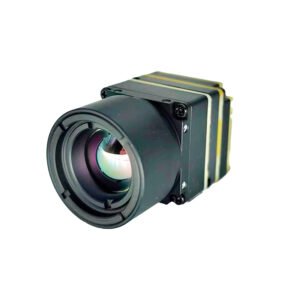
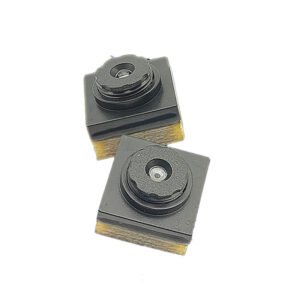
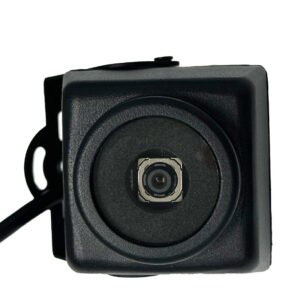
RGB is the color mode, representing Red, Green and Blue respectively, which is the most widely used color mode.IR is an Infrared light whose wavelength is longer than that of red light.In low light, use IR camera to enhance reality effect. Traditional COMS image sensors use Bayer format as Color Filter Array (CFA). The Color information of pixels is determined according to the specific wavelength of light. Rgb-IR technology uses RGB-IR CFA, based on Bayer format, to modify part of the pixels to IR pixels, which only allow infrared light to pass through. Using RGB-IR technology, RGB color images and IR images can be captured simultaneously by one same sensor device,which can get both day vision and night vision. RGB-IR technology functions RGB-IR technology was originally introduced to solve the problem of switching between day and night modes in the application of surveillance cameras, and the mechanical-controlled IR-CUT was introduced to solve the problem of infrared interference in RGB mode. For more information, welcome click our OV5640 DVP IR-Cut Camera Module and USB 2.0 UVC IR-CUT Camera Module.
Read More »
Purchase Guide
Britech

What is the wide dynamic of the camera? What are the main applications?

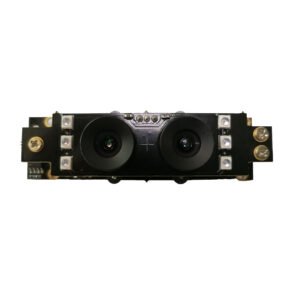
What is the wide dynamic? Wide dynamic range means that the brightest and darkest parts of the scene can be seen clearly at the same time. Wide dynamic range is the ratio of the brightest signal value that the image can distinguish to the darkest light signal value that can be distinguished. Wide dynamic technology is a technology used to let the camera see the characteristics of the image under very strong contrast. When the high brightness areas illuminated by strong light sources (sunlight, lamps or reflections, etc.) and relatively low brightness areas such as shadows and backlights exist in the image at the same time, the bright areas of the camera will become white due to overexposure, while the dark areas will become black due to underexposure, which seriously affects the image quality. There are limitations in the camera’s performance of the brightest and darker areas in the same scene, which is commonly known as “Dynamic Range”. What are the main applications? The main application fields of wide dynamic camera.Car toll system: at present, the focus of low illuminance and wide dynamic camera for road monitoring is the highway toll monitoring system, the lane of toll station, toll parking lot and apartment parking lot. Electronic police system: low-illumination wide-motion cameras play a huge role because of the need for 24-hour continuous monitoring and seeing the license plate clearly. Urban commercial street and its periphery: monitor areas with obvious light changes, including some applications in urban commercial streets, in order to grasp the traffic situation of some busy intersections, the operation of vehicles around the road section, the flow of pedestrians and traffic security and other issues. Bank systems : monitor the automatic door of the bank and the door of the ATM door. Here allow us to introduce our Wide dynamic range camera module, MIPI interface or USB interface are available, single lens or dual lens are acceptable too. USB2.0 Wide dynamic range dual lens camera module MIPI Interface Wide dynamic range dual lens camera module For more information, welcome to contact. Website: www.newcameramodule.comWebsite:www.cbritech.comEmail: info@cbritech.com

Read More »
camera module 4k 13mp uvc usb camera module
Purchase Guide
Britech

What kinds of camera module is suitable for high-speed photographic apparatus?

High-speed photographic apparatus is an instrument that can take pictures of documents and paper to replace scanners, connect printers, and operate computers. So what kinds of camera module can be used for high-speed photographic apparatus, which often confused some customers. Today we are going to introduce about what kinds of camera module is suitable for high camera equipment. The camera module of the high-speed photographic apparatus device need to meet the following points: 1. The pixel should not be less than 5 Megapixel. 2. Great image effect 3. Exposure controlled or automatic 4. Automatic brightness adjustment/Contrast/Color Hue/saturation/Definition/Gamma/White balance/Exposure and so on 5. Need LED fill light device 6. No distortion lens 7. Standard USB2.0 interfaces Here allow us to introduce our USB2.0 Sony IMX179 CMOS Sensor 8MP Camera Module. It is developed for high-speed photographic apparatus device. The camera module as the picture show. 1. 8MP Sony IMX179 CMOS Sensor 2. High sensitivity, low dark current, and no smear are achieved through the adoption of R, G, and B primary color pigment mosaic filters 3. Exposure controlled or automatic 4. Automatic brightness adjustment/Contrast/Color Hue/saturation/Definition/Gamma/White balance/Exposure and so on 5.6PCS LED fill light design 6. 76° No distortion lens( you can also choose 80°, 90° lens),can shoot A3, A4, A5, A6 paper , passport and so on 7. Standard USB2.0 Interface If you want more inforamtion, welcome to contact. Website: www.newcameramodule.comWebsite:www.cbritech.comEmail: info@cbritech.com

Read More »
CMOS Sensor Camera Module
Britech

The Difference of camera module interface for DVP & MIPI-CSI

What is MIPI interface ? MIPI is differential serial transmission, fast speed, anti-interference. Currently divided into D/C/M PHY categories. The main mobile modules now use MIPI_ DPHY or CPHY transmission: DPHY transmission uses 4 pairs of differential signals to transmit image data and a pair of differential clock signals. CPHY uses three sets of three single-ended signals to transmit data. Each single-ended signal can represent three logic levels, with a higher data transmission rate and fewer pins. MIPI is LVDS low voltage differential serial port, only need CLKP/N, DATAP/N — maximum support 4-lane, general 2-lane can be done. MIPI interface has fewer signal lines than DVP interface. Because it is a low-voltage differential signal, it produces little interference and has strong anti-interference ability. The MIPI camera has three power supplies: VDDIO (IO power supply) AVDD (Analog power supply) DVDD (Core digital power supply) Different sensor cameras have different power supply, AVDD has 2.8V or 3.3V; DVDD generally uses 1.5V or higher, different manufacturers have different designs, 1.5V May be provided by the sensor or external supply, if external power supply can be used, it is recommended to use external supply, the voltage should be greater than the internal DVDD; VDDIO voltage should be consistent with the level of MIPI signal line. If the signal line is at 2.8V level, VDDIO should also be supplied with 2.8V. Some sensors can also provide VDDIO from the inside without VDDIO. What is CSI and DSI ? The camera interface of MIPI is called CSI and the display interface of MIPI is called DSI. 5MP can also reluctantly use DVP, 8MP Sensor and above are MIPI interface. What is DVP inteface ? DVP is parallel port transmission, the speed is slow, the transmission bandwidth is low, use needs: PIN OUT Description PCLK Pixel clock MCLK(XCLK) External clock input VSYNC Vertical synchronization HSYNC Horizonal synchronization D[0:11] Parallel port data can be 8/10/12bit data size

Read More »

We will contact you within 1 working day, please pay attention to the email with the suffix “@cbritech.com”

One Request, Multiple Quotes