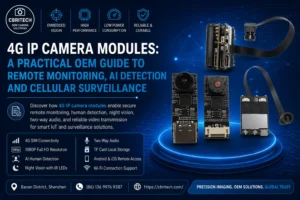

4G IP Camera Modules: A Practical OEM Guide to Remote Monitoring, AI Detection and Cellular Surveillance
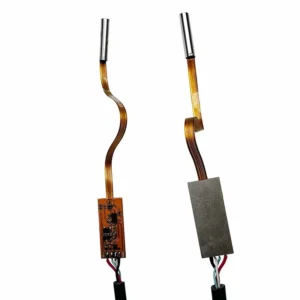
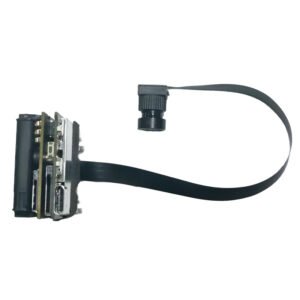
Traditional IP cameras work well when reliable Wi-Fi or wired network infrastructure is already available. But what happens when a product needs video connectivity in a location where fixed internet access is unavailable, inconvenient or unsuitable? That is where the 4G IP camera module becomes particularly valuable. By combining a camera, cellular connectivity, remote viewing and intelligent monitoring functions into an embedded architecture, a 4G camera module can help manufacturers develop portable security devices, remote monitoring equipment, connected surveillance systems and specialized OEM camera products without depending entirely on conventional local network infrastructure. CBRITECH’s 4G IP Camera Network Remote Control AI Dedicated Camera Module is designed around this requirement. The module supports a SIM card, remote monitoring, local TF-card storage, human detection, night vision, two-way audio and mobile access, while CBRITECH also offers different lens options and customized housings for OEM applications. For engineers and product developers, however, choosing a 4G camera should involve much more than asking whether the module accepts a SIM card. The imaging system, cellular architecture, storage, optics, remote software, power requirements, environmental conditions and OEM customization possibilities all need to be evaluated as part of the complete product. What Is a 4G IP Camera Module? A 4G IP camera module is an imaging system that combines camera functionality with IP-based video transmission and cellular connectivity. Instead of relying only on Ethernet or a local Wi-Fi network, a cellular-enabled camera can use a supported SIM/network connection to provide remote video functionality. This changes where connected cameras can potentially be deployed. For example, a conventional Wi-Fi camera normally needs to remain within an appropriate network environment. A 4G SIM camera module can be considered for products intended for more independent or portable deployment, provided cellular coverage and the rest of the system requirements are suitable. CBRITECH’s module is specifically designed for network remote monitoring and incorporates 4G cellular connectivity. The product also supports an all-in-one Wi-Fi network connection, giving OEM developers more flexibility when planning the final connectivity architecture. Why 4G Connectivity Matters for Remote Camera Systems The key advantage of 4G is not simply that it is “wireless.” Wi-Fi is wireless too. The important difference is network independence. A Wi-Fi camera generally needs access to a nearby router or wireless network. Cellular connectivity provides another path for products that need to communicate over greater geographic distances without being permanently tied to a particular local Wi-Fi installation. That makes a 4G remote monitoring camera relevant for product concepts involving remote locations, temporary installations, portable systems and other environments where conventional network infrastructure may be limited. From an OEM perspective, this can change the entire system design. Instead of asking: “How will the customer connect this camera to the local network?” the development team can evaluate: “Can the product establish its remote connection through an appropriate cellular network?” That can make deployment more flexible, although network availability, SIM/data plans, regional carrier compatibility and bandwidth requirements still need to be validated separately for the intended market. 1080P Imaging for Remote Monitoring Resolution is one of the first specifications buyers compare, but higher resolution is not automatically better for every remote camera. CBRITECH specifies a 2MP, 1920 × 1080 CMOS imaging system for this product. It also supports 1920 × 1080P, 1280 × 720P and 640 × 480P video output, with a listed frame rate of approximately 20–25 fps. This range gives developers options when balancing visual detail against bandwidth and storage requirements. For example, 1080P may be preferable when identifying scene details is important, while lower-resolution output may be useful where data transmission or storage efficiency has greater priority. This becomes especially important in a 4G system because video transmission consumes network data. The correct engineering decision is therefore not simply: “Use the highest resolution.” It is: “Use the resolution and bitrate that provide enough visual information for the application without unnecessarily increasing transmission and storage requirements.” CBRITECH lists a bitrate range of 32 KB–20 Mbps, giving developers another parameter to evaluate during system design. H.264 Video Encoding Video compression is particularly important for cellular cameras. Raw video requires substantial bandwidth, making efficient encoding essential for practical remote transmission. The CBRITECH module uses H.264 video encoding. For OEM developers, compression should be evaluated alongside resolution, frame rate, network conditions and required image quality. A remote surveillance system may not need maximum image quality continuously. Depending on the application, the system architecture may prioritize efficient monitoring and then preserve higher-quality footage when an important event occurs. The camera should therefore be treated as part of a complete video-data architecture rather than simply as an image sensor. Human Detection for Smarter Monitoring One of the most commercially important features of the product is human-form detection. CBRITECH lists human detection alongside functions such as alarms, customized investigation areas, human-shaped framing, image mirroring and DV mode. Why does this matter? Traditional surveillance systems can generate large quantities of footage. If every visual change is treated equally, the system may capture events that have little practical importance. Human detection can make monitoring more targeted by helping the system distinguish human presence as a meaningful event. For an OEM product developer, that creates opportunities to design smarter monitoring workflows around specific use cases. However, it is important not to overstate the capability. The CBRITECH page specifically confirms human-form detection; it does not claim advanced identity recognition or facial identification. Those are different technologies and should not be presented as equivalent. Night Vision for Low-Light Monitoring Remote cameras frequently need to operate beyond daylight hours. CBRITECH specifies 940 nm IR LEDs and night-vision functionality. The camera’s listed minimum illumination is RGB 0.01 Lux at F1.2. Infrared illumination can help a camera capture useful visual information when visible ambient lighting becomes insufficient. This makes night-vision capability particularly important for security and monitoring applications expected to operate continuously. When evaluating an OEM camera, however, developers should test night performance in the actual target environment. Indoor rooms, outdoor areas, narrow corridors and reflective surfaces can behave differently under