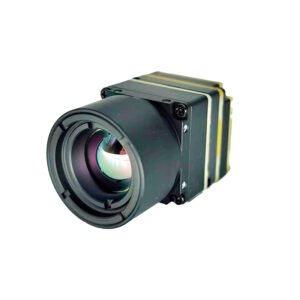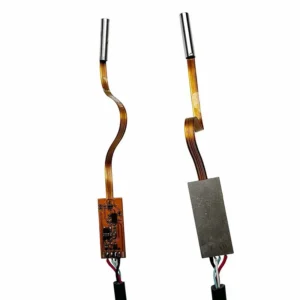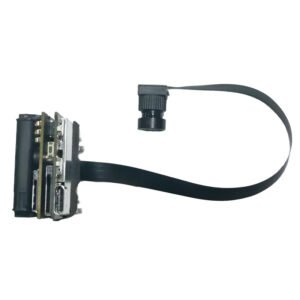
A thermal imaging component detects differences in infrared radiation and can help reveal temperature-related contrast in a scene. Shenzhen Brilliant CMOS Technology Co., Ltd. provides thermal imaging component options for teams developing inspection, monitoring and unmanned imaging systems. A thermal module should be chosen for the intended detection task, operating environment and integration architecture rather than treated as a substitute for a complete thermal camera system. For a product-level example, review the thermal imaging camera core and confirm its interface configuration for the intended system.
Some applications require identifying warmer or cooler areas, while others need calibrated temperature measurement. These are different requirements. Confirm whether the selected module supports qualitative imaging only or provides validated measurement output. For equipment inspection, also consider target size, distance, field of view and the smallest temperature contrast that must be observed.
A thermal drone application requires more than an infrared camera component. The complete system may need a compatible processor, mounting hardware, stabilization, recording or transmission electronics and appropriate power delivery. A search for first-person-view imaging component may indicate a real-time viewing requirement, but latency and transmission behavior depend on the entire signal chain. Confirm video output and integration requirements before selecting hardware. For additional system-level context, read the thermal imaging camera module guide before finalizing the airborne platform architecture.
Specify the operating temperature range, expected vibration, installation space, output interface and available power. Thermal imagery behaves differently from visible-light photography, so the evaluation should use representative scenes and conditions. Avoid assuming that every thermal module provides the same image resolution, frame rate, sensitivity or measurement accuracy.
Share the intended inspection or unmanned-system use case with Shenzhen Brilliant CMOS Technology Co., Ltd., including viewing distance, interface, mounting constraints and required output. A component-level assessment can help determine which module options merit prototype testing.
A thermal image can show contrast without necessarily providing calibrated temperatures. Before integrating a module into an inspection or airborne platform, determine whether the application requires visual detection, comparative thermal patterns or numerical temperature data. Document the required viewing distance, field of view and expected scene conditions so that the selected component can be assessed against a clear use case.