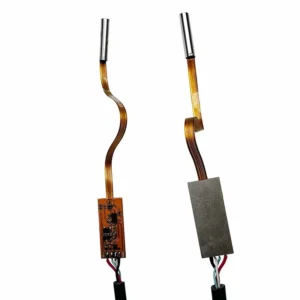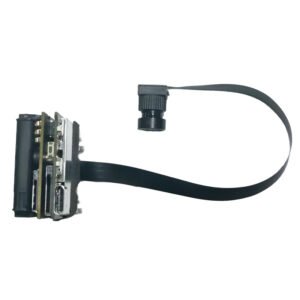

Modern embedded products increasingly need to do more than sense temperature, motion or location. They need to see.
From smart monitoring equipment and compact IoT devices to image-recognition systems and AI-assisted prototypes, visual input is becoming an important part of embedded product development. But adding a camera to a compact embedded platform introduces a series of engineering decisions: sensor interface, wiring complexity, processor compatibility, image format, frame rate, lens selection and software integration all influence how quickly a concept can become a reliable product.
For developers working with the ESP32 ecosystem, this is particularly important. Traditional camera implementations commonly rely on DVP-connected modules, but USB-based camera architectures provide another approach for projects where simplified connectivity, UVC support and easier integration are priorities.
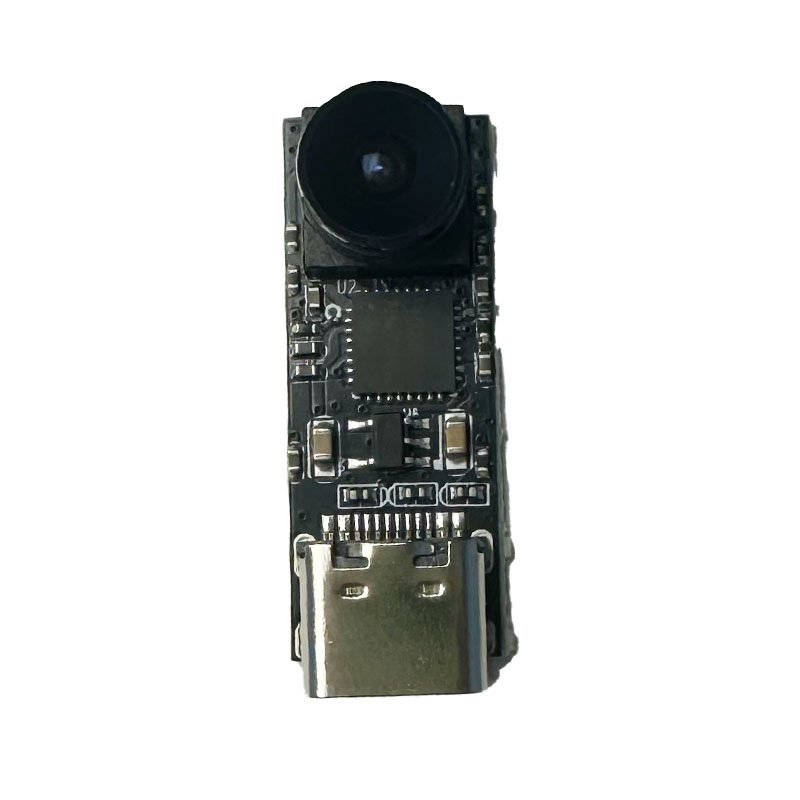
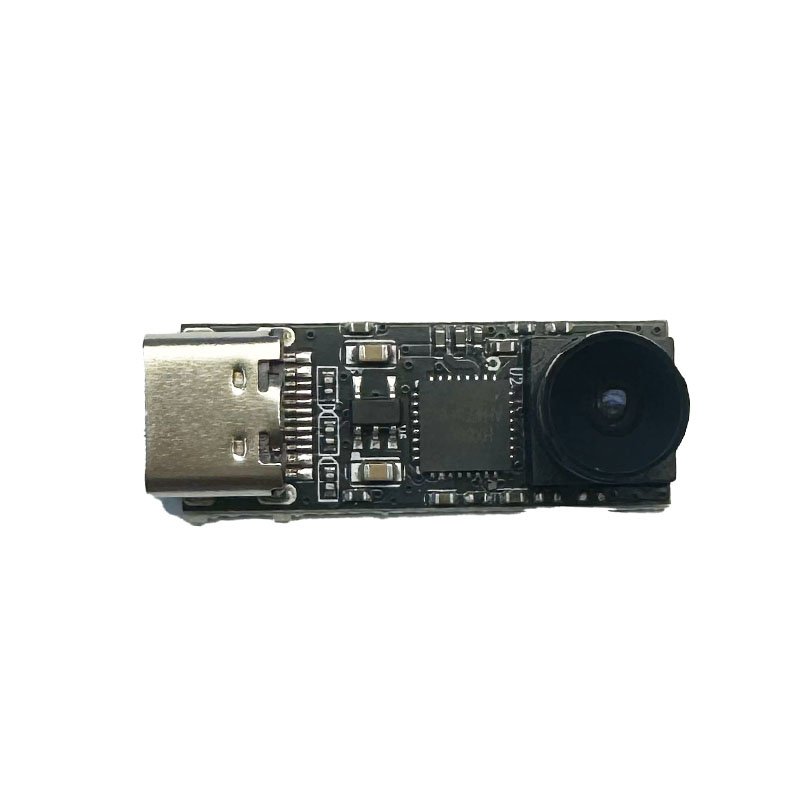
CBRITECH’s ESP32 Cam 720P USB Camera Module for Vision Development is designed around this requirement. The module combines a compact camera architecture with USB connectivity for ESP32-S3-oriented vision development, creating an option for engineers developing embedded AI, IoT vision, monitoring and image-recognition products.
Why ESP32-S3 Is Becoming Important for Embedded Vision
The requirements placed on embedded devices are changing.
A traditional IoT node may only collect information from basic sensors. A modern vision-enabled device can potentially capture images or video and pass that visual data into software for detection, monitoring, classification or other computer-vision workflows.
This creates opportunities in areas such as smart monitoring, connected devices, education and development platforms, AI vision prototypes and compact embedded products.
But the camera becomes a critical part of the architecture. An embedded vision system is only as useful as the visual information supplied to it. Engineers therefore need to evaluate more than megapixels when selecting an ESP32 camera module.
The interface, physical dimensions, field of view, frame rate, optical configuration and integration requirements can be just as important as nominal resolution.
Traditional DVP Camera Modules vs USB Camera Modules
Many developers associate ESP32 camera development with DVP camera modules such as OV2640-based designs.
That architecture can be appropriate for many applications, but it requires the development platform to handle the camera’s parallel interface and associated signals.
A USB camera changes the integration model.
Rather than treating the image sensor primarily as a raw parallel camera peripheral, a USB camera module can package imaging and transmission functionality into a more standardized connection.
CBRITECH specifically positions its module as an alternative to traditional OV2640, OV3660 and OV5640 DVP camera modules, with the objective of reducing wiring and hardware-debugging complexity in compatible ESP32-oriented vision systems.
That distinction matters to OEM teams because development time is part of product cost.
A lower-cost camera that requires extensive engineering work is not necessarily the lower-cost solution at the system level.
What Is an ESP32-S3 USB Camera Module?
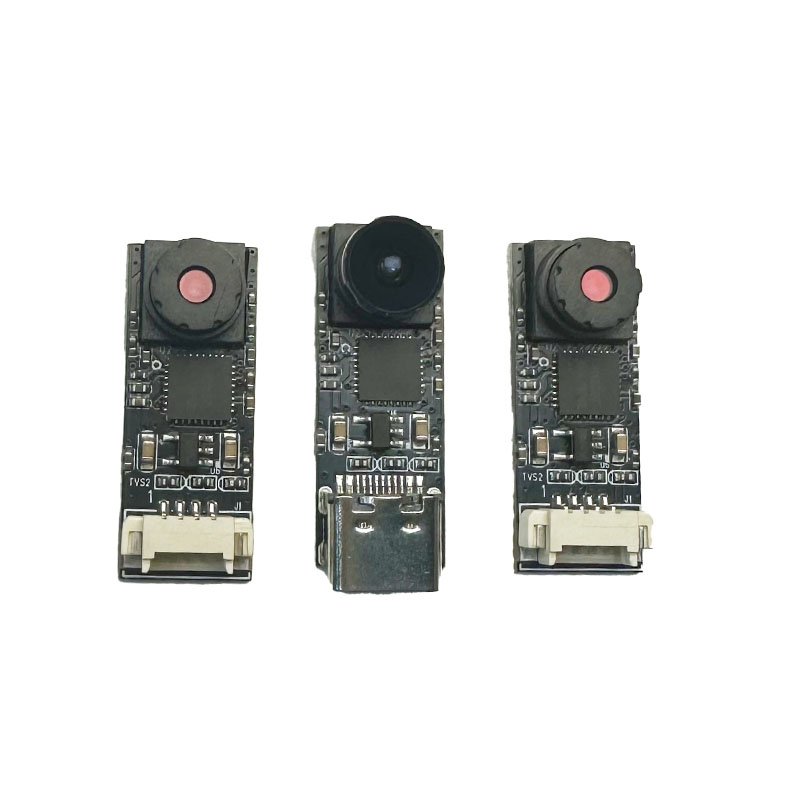
An ESP32-S3 USB camera module is a compact imaging module intended to provide visual data through a USB-based architecture for ESP32-S3-oriented applications.
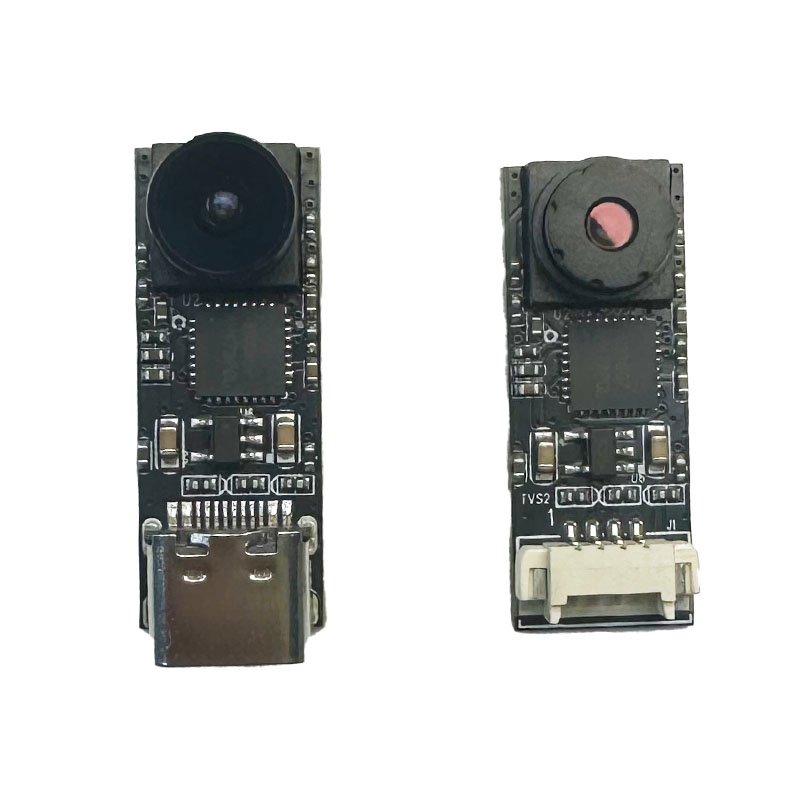
CBRITECH’s current module uses a USB 2.0 interface and USB bus power at 5V. The product page also identifies standard UVC support and a Type-C interface.
Its listed module dimensions are only 26 mm × 11 mm, making physical integration possible in compact products where PCB space is limited.
For OEM developers, this combination is particularly useful when the goal is not merely to demonstrate a camera but to create a repeatable hardware architecture that can eventually move toward productization.
720P Resolution: Why More Megapixels Are Not Always Better
It is easy to assume that higher resolution automatically means a better embedded camera.
In reality, resolution should match the application’s actual visual requirements and processing budget.
CBRITECH lists an active array of 1288 × 728 and supports 1280 × 720 output. The listed output configurations include:
| Output | Maximum Listed Frame Rate |
|---|---|
| 1280 × 720 | 40 fps |
| 640 × 480 | 60 fps |
| 320 × 240 | 120 fps |
The module supports YUV and MJPEG output formats.
This gives developers an important engineering trade-off.
A project that needs visual detail may prioritize 720P output. A vision algorithm that values responsiveness over resolution may instead operate at a lower resolution and higher frame rate.
That flexibility can be more useful than simply specifying the highest possible megapixel count.
Wide Field of View for Embedded Vision
Lens selection determines what the camera actually sees.
The module is specified with an approximately 104° field of view, a 1.5 mm effective focal length and F/2.2 optics.
A wide field of view can be useful when a device needs to observe a comparatively broad scene from a short distance.
Potential applications include compact monitoring equipment, IoT devices, educational vision systems, smart-device prototypes and certain machine-vision experiments.
However, engineers should not choose a wide-angle camera simply because the number is larger. A narrower field may be preferable when the target occupies a small portion of the scene or when greater pixel density on a specific object is required.
The correct lens is therefore an application-level decision, not merely a camera specification.
Automatic Image Controls
Embedded products often operate in environments where lighting cannot be perfectly controlled.
The CBRITECH module lists automatic:
AGC — Automatic Gain Control
AEC — Automatic Exposure Control
White Balance
These functions can help the imaging system adapt to changing illumination without requiring the host application to manually control every image parameter.
For prototypes, IoT devices and monitoring applications, this can simplify initial integration.
For highly controlled industrial vision systems, however, engineers may still want to validate whether automatic exposure behavior is appropriate for the target algorithm. Computer vision frequently values image consistency differently from human viewing.
UVC and Why It Matters
One of the more commercially valuable characteristics of this product is its UVC-oriented architecture.
USB Video Class provides a standardized framework for transmitting video over USB. CBRITECH states that its ESP32-oriented camera uses the standard UVC protocol and is intended to reduce the requirement for additional driver installation on supported host environments.
For developers, this can reduce the amount of camera-specific software work required during evaluation.
Instead of spending a large part of the prototype phase simply getting images out of the camera, the engineering team can focus more quickly on what happens after image capture.
That might include:
image preprocessing,
object detection,
classification,
monitoring logic,
image transmission,
data logging,
or interaction with a larger AI system.
This is where a well-designed USB camera module for embedded vision can provide value beyond the camera hardware itself.
ESP32 Camera Modules for Computer Vision
Computer vision does not begin with an AI model. It begins with reliable visual input.
A camera intended for an ESP32 computer-vision project therefore needs to be evaluated as part of the complete image pipeline:
Scene → Lens → Sensor → Camera electronics → Interface → Host → Image processing → Decision
Weakness anywhere in that chain can affect the final result.
For example, increasing model accuracy may accomplish little if motion blur makes the object difficult to identify. Similarly, a high-resolution sensor may add unnecessary bandwidth if the algorithm eventually downsamples every frame.
Developers should therefore choose an ESP32 camera module for computer vision based on the information their algorithm actually requires.
Potential Applications
CBRITECH currently positions this module for machine vision, image recognition, monitoring, IoT vision, educational development and AI visual-recognition projects.
That creates several useful development directions.
IoT Vision Devices
A connected device can use a camera as an additional sensor, enabling visual monitoring or image-based event detection.
Instead of only reporting a numerical measurement, the system can incorporate information extracted from images.
AI Visual Recognition
An ESP32 AI camera module can provide the visual input required for prototype recognition workflows.
Depending on the overall architecture, processing may occur locally, on another edge processor or elsewhere in the system.
Smart Monitoring
Compact USB cameras can support systems that periodically or continuously observe a scene and respond to defined visual conditions.
Educational Vision Platforms
USB connectivity can make camera experimentation more approachable for students and development teams learning computer vision.
An ESP32-oriented vision platform can be used to explore image acquisition, processing pipelines and recognition concepts before moving toward a more specialized production architecture.
Prototype Development
Perhaps the most practical application is rapid prototyping.
Engineering teams frequently need to determine whether a visual concept is technically viable before investing in custom hardware.
A compact USB camera allows teams to validate optics, image quality, software workflows and mechanical placement early in the product-development cycle.
When Should You Consider Replacing an OV2640 Camera?
The OV2640 remains widely associated with ESP32 camera development, so buyers searching for an OV2640 alternative camera module should first understand why they want to change architectures.
USB may be worth evaluating when your project prioritizes simpler connectivity, standardized video transport, reduced parallel-interface wiring or faster prototype development.
CBRITECH specifically describes its current product as a replacement option for traditional DVP camera modules including OV2640, OV3660 and OV5640 designs.
That does not mean every existing DVP camera can simply be exchanged without engineering validation. Mechanical dimensions, electrical architecture, firmware, host USB capability, image characteristics and application requirements still need to be checked.
For an OEM, “replacement” should therefore mean a possible architecture migration path, not an assumption of universal pin-for-pin compatibility.
What OEM Buyers Should Evaluate Before Purchasing
Purchasing an embedded camera is different from buying a webcam.
Before moving from sample testing to volume procurement, an OEM should establish a camera specification covering at least:
Resolution and frame rate: Determine what the application genuinely requires.
Field of view: Define the required scene coverage and working distance.
Interface: Confirm that USB/UVC fits the host architecture.
Mechanical envelope: Validate the 26 × 11 mm module against the available internal space.
Operating environment: CBRITECH lists an operating temperature range of −10°C to 60°C, which should be validated against the final product environment.
Image format: Confirm whether YUV or MJPEG is appropriate for the software pipeline.
Cable and connector: Define Type-C, cable length, orientation and mechanical constraints.
Optics: Confirm FOV, focus distance and lens characteristics against the target scene.
Supply continuity: Evaluate whether the camera and key components can remain available throughout the expected product lifecycle.
The last point is particularly important for commercial products. CBRITECH states that it supports stock supply for wholesale and customized orders and positions OEM customization as part of its broader camera-module service.
From Prototype to OEM Camera Module
The requirements of a prototype and a production product are rarely identical.
During early development, engineers may primarily care about getting a stable image into the system.
Production introduces additional questions:
Will the camera fit the enclosure?
Does the cable exit in the correct direction?
Is the lens appropriate?
Does image tuning match the target environment?
Can the connector survive assembly?
Can the supplier maintain component consistency?
Can the module be produced repeatedly at the required volume?
This is why OEM camera sourcing should begin before the final mechanical and electrical design is frozen.
CBRITECH states that its broader OEM service can support camera-module customization, while its product architecture spans USB, CMOS, MIPI, DVP and other camera categories.
For developers who need a broader USB solution, CBRITECH’s USB Camera Module range can also be used as an internal pathway from this article.
For projects built specifically around the ESP32 ecosystem, the ESP32 Camera Module category should be another prominent contextual internal link.
ESP32 USB Camera vs Traditional DVP Camera: Quick Selection Guide
| Requirement | USB/UVC Approach | Traditional DVP Approach |
|---|---|---|
| Simplified video connectivity | Strong advantage | More integration work |
| Parallel camera control | Not the primary architecture | Strong |
| Rapid vision prototyping | Strong | Application dependent |
| Wiring simplicity | Generally simpler | More signal lines |
| Legacy ESP32 camera designs | Requires architecture review | Common |
| UVC workflow | Yes, where supported | No |
| Custom embedded architecture | Good depending on host | Good |
| OEM productization | Suitable after validation | Suitable after validation |
Neither interface is universally superior.
The correct choice depends on the host processor, software architecture, physical constraints, required bandwidth and production objectives.
Final Thoughts
The next generation of ESP32 development is moving beyond simple camera demonstrations toward practical embedded vision.
For those applications, the most valuable camera is not necessarily the one with the highest resolution. It is the camera that fits the complete system: mechanically, electrically, optically and commercially.
A compact ESP32-S3 USB camera module can provide an attractive development path when a project needs 720P imaging, USB connectivity, UVC-oriented integration, wide-angle optics and a compact form factor.
CBRITECH’s module combines these characteristics with multiple frame-rate options and is specifically positioned for ESP32-oriented vision development, IoT devices, smart monitoring and AI visual-recognition projects.
For OEM teams, the next step should be to validate the camera against the actual working distance, lighting conditions, host platform, processing requirements and mechanical design before committing to production.
Developing an ESP32-S3, IoT or embedded vision product?
Discuss your ESP32 camera module requirements with CBRITECH
CBRITECH can evaluate the required camera architecture, optics, interface and OEM customization requirements for your application.