
Modern surveillance is moving far beyond traditional CCTV installations. Cameras are becoming smaller, smarter and easier to integrate into connected products, while businesses increasingly need remote access, wireless connectivity, AI-assisted monitoring and compact hardware that can fit inside purpose-built devices.
That change has created demand for everything from the mini camera spy cam and spy camera wireless mini categories searched by end users to professional IP and embedded camera modules used by manufacturers, IoT developers and security-system integrators.
For an OEM or product developer, however, choosing a camera should involve much more than finding the smallest available module. Image resolution, wireless connectivity, low-light performance, field of view, processing capabilities, storage, interfaces and customization can all determine whether a camera is suitable for the final product.
This guide explains how modern compact surveillance camera technology works, what buyers should evaluate, and how different camera architectures can be matched with home, commercial and industrial monitoring applications.
Why Surveillance Cameras Are Becoming Smaller and Smarter
Traditional surveillance systems generally relied on relatively large cameras installed at fixed positions and connected to centralized recording equipment.
That model still has an important place in security, but modern product development has created another requirement: cameras that can become part of the device itself.
Compact camera technology can now be incorporated into smart-home products, access-control equipment, IoT systems, portable monitoring products, industrial equipment and other embedded electronics.
For manufacturers, the important distinction is that a small camera module is not simply a miniature version of a CCTV camera. It can become an imaging component around which an entire product is developed.
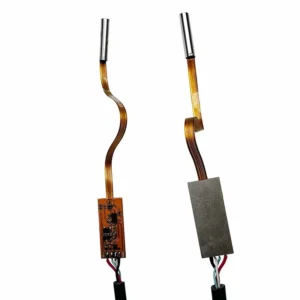
CBRITECH’s surveillance camera module range currently includes 4G, high-resolution IP and miniature WiFi solutions, providing different architectures for different monitoring requirements.
What Is a Mini Camera Spy Cam?
The phrase mini camera spy cam is commonly used when people search for extremely compact cameras designed for unobtrusive monitoring.
From an engineering perspective, however, the more useful concept is a miniature surveillance camera module.
Instead of focusing exclusively on whether a camera can be concealed, OEM buyers should consider whether its dimensions and architecture allow it to be integrated cleanly into the intended enclosure or finished product.
Compact modules can be valuable where designers have limited internal space or need greater freedom over the final enclosure.
Typical applications can include smart security products, portable monitoring equipment, IoT devices, access-control systems, equipment monitoring and custom surveillance products.
This distinction is particularly important for manufacturers. The best hidden cameras for a consumer and the best miniature camera modules for an OEM product are not necessarily the same thing.
Spy Camera Wireless Mini Technology: What Does Wireless Actually Add?
One of the most commercially useful developments in compact surveillance has been wireless connectivity.
A spy camera wireless mini search often reflects a simple buyer requirement: the user wants a small camera without being tied to a conventional wired surveillance installation.
For product developers, WiFi can provide considerably more value.
A WiFi-enabled camera architecture can support remote monitoring while reducing the need for dedicated video cabling. Depending on the hardware and software platform, this can enable smartphone or computer access and make the camera easier to incorporate into connected IoT products.
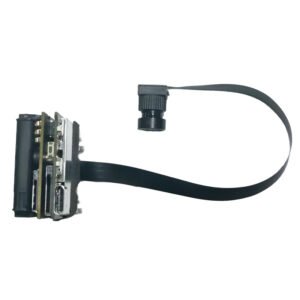
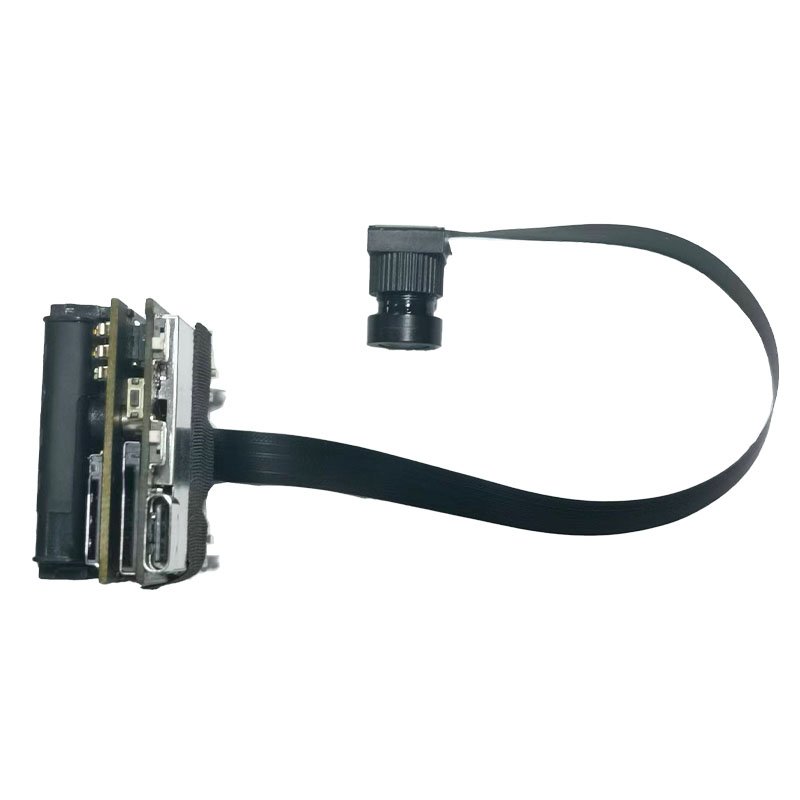
CBRITECH’s 1080P IP Mini WiFi Camera Module, for example, uses a 1/2.7-inch CMOS sensor with 1920 × 1080 resolution and supports 802.11b/g/n WiFi and remote access. The module also provides TF-card storage support up to 64 GB and Android/Windows application compatibility, with iOS customization available.
For developers evaluating a spy camera hidden WiFi architecture, these are more meaningful considerations than size alone.
Important wireless-camera considerations include:
- network compatibility and stability;
- remote-access requirements;
- video resolution and frame rate;
- local versus remote storage;
- application/platform compatibility;
- power consumption;
- antenna and enclosure considerations;
- cybersecurity and access control.
A compact WiFi module can therefore serve as the imaging foundation of a much larger connected-security product.

Image Quality Still Comes First
Making a camera smaller is useful only when the resulting image remains suitable for the intended application.
Resolution is the most visible specification, but it should not be evaluated independently.
A surveillance system may need to identify people or objects, monitor machinery, observe entrances, document events or simply provide general situational awareness. Each application creates different imaging requirements.
Important factors include sensor size, resolution, frame rate, lens quality, field of view, dynamic range and low-light performance.
For example, CBRITECH’s miniature WiFi module provides Full HD 1920 × 1080 output, configurable resolutions and a stated WDR specification above 100 dB. It also lists minimum illumination of 0.01 Lux at F1.2.
The correct camera is therefore not automatically the one with the largest megapixel figure. The imaging system should be selected around the environment in which it actually needs to operate.
Why Low-Light Performance Matters
Security cameras rarely operate under perfect studio lighting.
Entrances may contain strong backlighting. Warehouses may have dark corners. Outdoor environments change dramatically throughout the day. Industrial installations can combine bright machinery lights with shadowed areas.
Low-light performance therefore deserves serious consideration when comparing compact surveillance modules.
Dynamic range is equally important.
A camera observing an entrance, for example, might simultaneously see a dark interior and a brightly illuminated exterior. Without adequate dynamic-range performance, important details can disappear into either shadows or highlights.
OEM buyers evaluating hidden security cameras or embedded surveillance hardware should therefore look beyond headline resolution and examine how the complete imaging system performs under the lighting conditions expected in the final application.
When an 8MP IP Camera Makes More Sense
Miniaturization isn’t always the primary requirement.
Applications requiring greater detail or more advanced edge intelligence may benefit from a more capable IP-camera architecture.
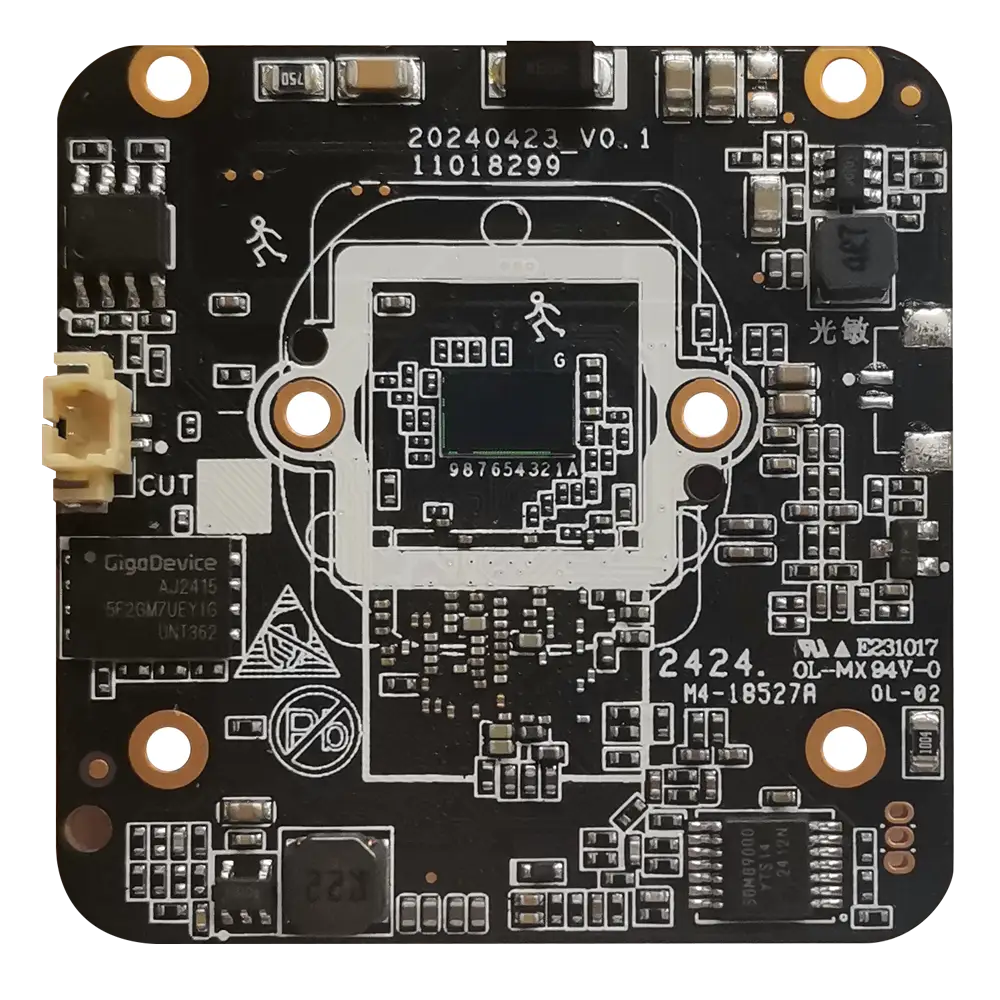
CBRITECH’s 8MP IP camera supports resolution up to 3840 × 2160 and uses an embedded Linux architecture with a dual-core A53 processor and stated 2T INT8 computing capability. The product also supports smart events including human-figure motion detection, area intrusion and tripwire detection.
Its interfaces include Ethernet, UART, USB and other connectivity options, while networking support includes protocols such as HTTP, TCP/IP, RTSP, RTP and ONVIF.
This makes the architecture particularly relevant where surveillance needs to become part of a more sophisticated security or monitoring platform rather than simply capturing video.
OEMs can review the different options together through CBRITECH’s Surveillance Camera category.
Mini Camera vs IP Camera vs 4G Camera
There is no single surveillance-camera architecture that is ideal for every project.
| Camera Type | Strongest Advantage | Typical Requirement |
|---|---|---|
| Mini WiFi camera module | Compact wireless integration | Smart devices, portable monitoring, embedded WiFi products |
| High-resolution IP camera | Resolution and processing | Professional security and intelligent monitoring |
| 4G camera module | Cellular connectivity | Remote locations without dependable local network access |
This distinction becomes important when buyers search for industrial security cameras.
An industrial installation may prioritize completely different characteristics from a home-monitoring product. Reliability, network architecture, environmental conditions, continuous operation, integration capability and maintainability may matter more than making the camera virtually invisible.
Industrial Security Cameras Need a Different Buying Approach
Industrial monitoring can include factories, production lines, warehouses, remote equipment, machinery, logistics facilities and restricted areas.
In these applications, a surveillance camera may support more than conventional security.
It can potentially be used for process observation, remote equipment supervision, access monitoring and event verification.
That changes the purchasing criteria.
Instead of asking only:
“How small is the camera?”
an OEM should ask:
“Can this imaging system deliver the required information reliably inside the complete product?”
This means considering image quality, operating conditions, interface requirements, network architecture, power availability, enclosure limitations and software integration as one system.
When 4G Connectivity Becomes Valuable
WiFi is useful where a reliable network is already available. But remote monitoring sometimes needs to operate beyond conventional WiFi or Ethernet infrastructure.
That is where cellular camera technology becomes relevant.
CBRITECH’s surveillance category includes a dedicated 4G IP Camera Network Remote Control AI Camera Module, alongside its WiFi and wired IP solutions.
A 4G architecture can be particularly interesting for OEM projects involving remote or mobile monitoring where providing a fixed network connection would be difficult.
Rather than forcing one connectivity architecture into every product, manufacturers can select between WiFi, Ethernet and cellular approaches according to deployment conditions.
What Makes the Best Hidden Cameras for OEM Development?
There isn’t one universal answer.
For an OEM, the “best” solution is the camera that satisfies the product’s imaging requirements while fitting its electrical, mechanical, connectivity and software constraints.
Before selecting a camera module, evaluate:
- Required resolution — determine how much visual detail the application actually needs.
- Physical dimensions — confirm that the module, lens and cable arrangement fit the enclosure.
- Connectivity — decide whether WiFi, Ethernet, 4G or another interface best matches deployment.
- Field of view — choose a lens appropriate for the monitoring distance and coverage area.
- Low-light requirements — determine whether the system will operate in dark or unevenly illuminated environments.
- Storage architecture — establish whether footage needs local, network or cloud storage.
- Processing requirements — decide whether conventional video capture is sufficient or intelligent edge processing is needed.
- Platform compatibility — confirm application, operating-system and protocol requirements before hardware selection.
- Operating environment — evaluate temperature, humidity and other environmental requirements.
- Customization — determine whether the standard board, lens, FPC or interface needs modification for production.
This process is considerably more reliable than selecting hardware based purely on search phrases such as best hidden cameras or the highest advertised resolution.
Why OEM Customization Matters
Off-the-shelf surveillance cameras are built around predetermined dimensions and functions.
An OEM project works differently.
The camera often has to fit the product rather than forcing the product to fit the camera.
That may create requirements involving lens selection, field of view, FPC configuration, board dimensions, interface design, application compatibility or other system-level changes.
CBRITECH’s Mini WiFi camera, for example, lists customizable FPC length, field-of-view options from 60° to 200°, optional audio and configurable application support among its available options.
For manufacturers developing their own security or monitoring hardware, this flexibility can be more important than buying a completely finished surveillance camera.
Responsible Use of Compact Surveillance Technology
Compact and concealed camera technology should always be deployed responsibly.
Privacy, consent, workplace-monitoring requirements, recording laws and data-protection obligations differ between jurisdictions and applications. Businesses integrating hidden or discreet cameras into products should therefore ensure that both the hardware design and its intended use comply with applicable laws and privacy requirements.
Discreet hardware should never be treated as permission for covert or unlawful surveillance.
Choosing the Right Surveillance Camera Architecture
The modern surveillance market covers a broad range of technologies.
A mini camera spy cam may be appropriate when physical size is the main constraint. A spy camera wireless mini or spy camera hidden WiFi architecture can make more sense when compact dimensions and network connectivity are both required. Higher-resolution IP systems become more appropriate when image detail and intelligent processing take priority, while 4G camera technology can address installations that need remote connectivity without relying on a local network.
For industrial and OEM buyers, the most important step is therefore defining the application first and choosing the camera architecture second.
CBRITECH’s Surveillance Camera solutions bring its Mini WiFi, IP and 4G camera options together, making the category page the correct internal destination for readers comparing surveillance architectures.
Frequently Asked Questions
What is a mini camera spy cam?
It generally refers to a very small camera intended for discreet monitoring. For OEM development, the more important consideration is whether the miniature camera module can meet the product’s image-quality, connectivity, power and mechanical requirements.
What should I look for in the best hidden cameras?
Evaluate resolution, low-light imaging, field of view, connectivity, storage, physical dimensions and reliability rather than choosing based on size alone.
How does a spy camera wireless mini system work?
A wireless miniature camera typically captures video through a CMOS sensor and uses wireless connectivity such as WiFi to provide network or remote access. Exact capabilities depend on the camera hardware and software platform.
Are mini cameras suitable for industrial security?
They can be, particularly where installation space is restricted. However, industrial security cameras should be selected based on operating environment, reliability, image quality, networking and integration requirements rather than concealment alone.
What is the advantage of a spy camera hidden WiFi module?
WiFi can provide remote monitoring while reducing dependence on dedicated video cabling. It is particularly useful for connected security products, IoT devices and compact monitoring systems where an appropriate WiFi network is available.
When should an OEM consider a 4G camera instead of WiFi?
A cellular architecture becomes useful when the camera needs remote network access at a location where dependable WiFi or wired infrastructure is unavailable.
Can surveillance camera modules be customized for OEM products?
Depending on the module, customization can include areas such as lens/FOV, FPC configuration, interfaces, audio and platform integration. The exact requirements should be confirmed with the manufacturer before production.