
Traditional IP cameras work well when reliable Wi-Fi or wired network infrastructure is already available. But what happens when a product needs video connectivity in a location where fixed internet access is unavailable, inconvenient or unsuitable?
That is where the 4G IP camera module becomes particularly valuable.
By combining a camera, cellular connectivity, remote viewing and intelligent monitoring functions into an embedded architecture, a 4G camera module can help manufacturers develop portable security devices, remote monitoring equipment, connected surveillance systems and specialized OEM camera products without depending entirely on conventional local network infrastructure.
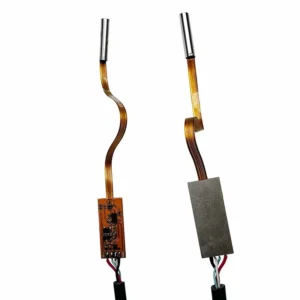
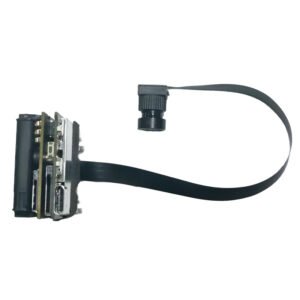
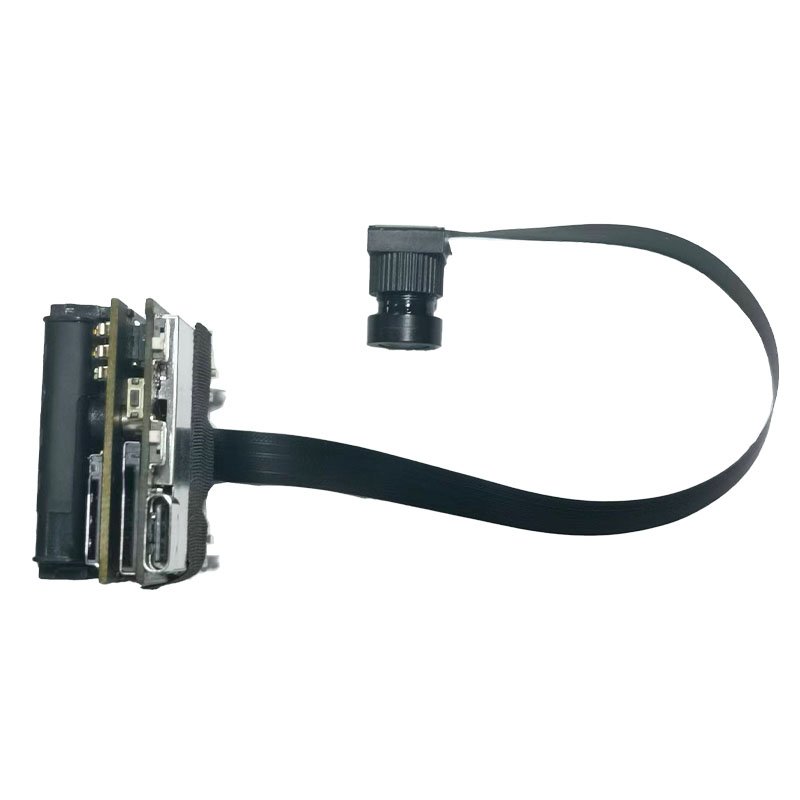
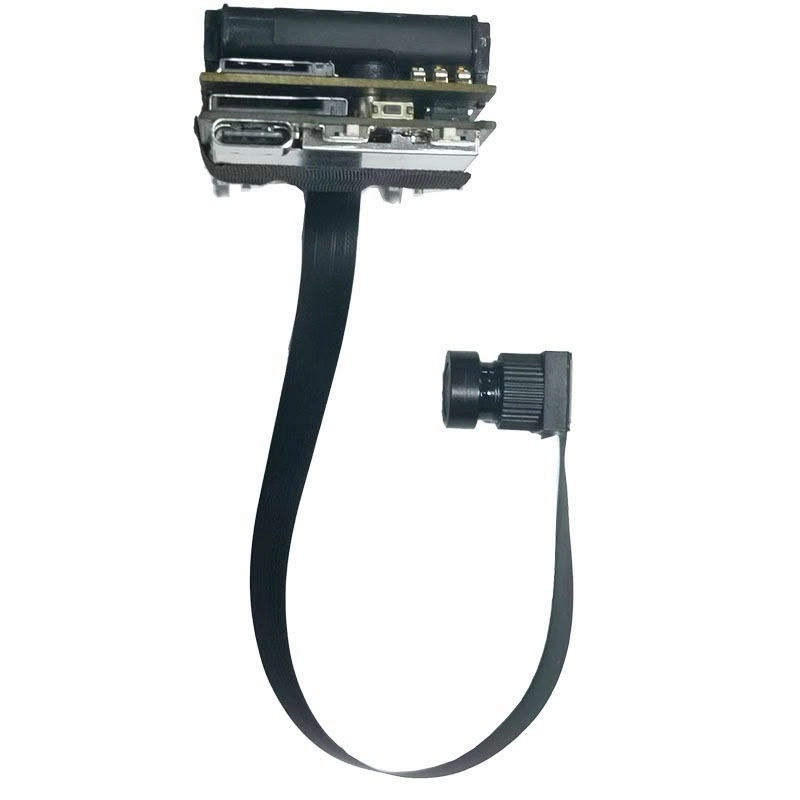
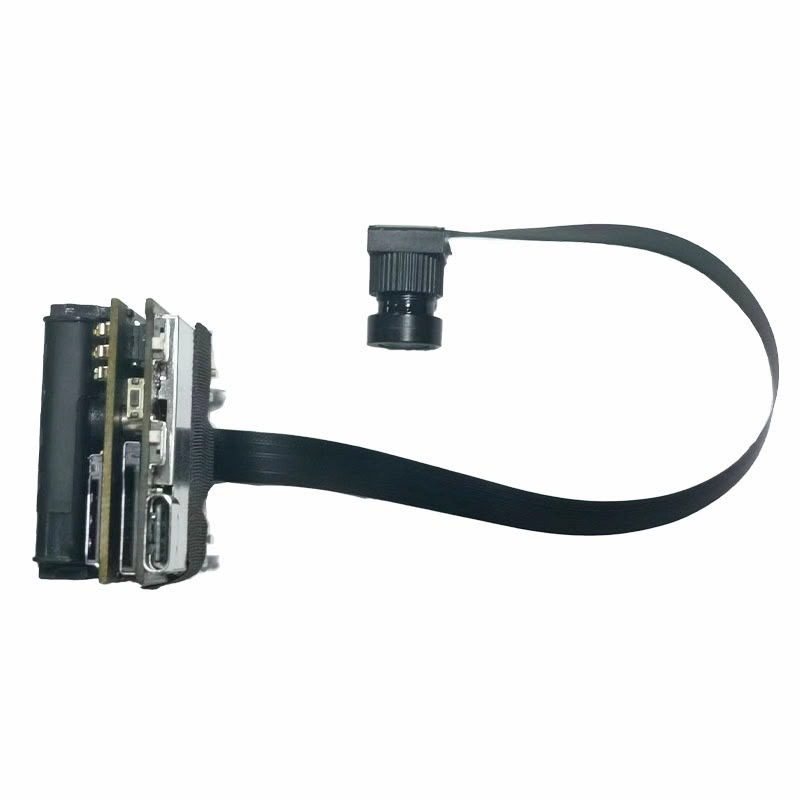
CBRITECH’s 4G IP Camera Network Remote Control AI Dedicated Camera Module is designed around this requirement. The module supports a SIM card, remote monitoring, local TF-card storage, human detection, night vision, two-way audio and mobile access, while CBRITECH also offers different lens options and customized housings for OEM applications.
For engineers and product developers, however, choosing a 4G camera should involve much more than asking whether the module accepts a SIM card.
The imaging system, cellular architecture, storage, optics, remote software, power requirements, environmental conditions and OEM customization possibilities all need to be evaluated as part of the complete product.
What Is a 4G IP Camera Module?
A 4G IP camera module is an imaging system that combines camera functionality with IP-based video transmission and cellular connectivity.
Instead of relying only on Ethernet or a local Wi-Fi network, a cellular-enabled camera can use a supported SIM/network connection to provide remote video functionality.
This changes where connected cameras can potentially be deployed.
For example, a conventional Wi-Fi camera normally needs to remain within an appropriate network environment. A 4G SIM camera module can be considered for products intended for more independent or portable deployment, provided cellular coverage and the rest of the system requirements are suitable.
CBRITECH’s module is specifically designed for network remote monitoring and incorporates 4G cellular connectivity. The product also supports an all-in-one Wi-Fi network connection, giving OEM developers more flexibility when planning the final connectivity architecture.
Why 4G Connectivity Matters for Remote Camera Systems
The key advantage of 4G is not simply that it is “wireless.”
Wi-Fi is wireless too.
The important difference is network independence.
A Wi-Fi camera generally needs access to a nearby router or wireless network. Cellular connectivity provides another path for products that need to communicate over greater geographic distances without being permanently tied to a particular local Wi-Fi installation.
That makes a 4G remote monitoring camera relevant for product concepts involving remote locations, temporary installations, portable systems and other environments where conventional network infrastructure may be limited.
From an OEM perspective, this can change the entire system design.
Instead of asking:
“How will the customer connect this camera to the local network?”
the development team can evaluate:
“Can the product establish its remote connection through an appropriate cellular network?”
That can make deployment more flexible, although network availability, SIM/data plans, regional carrier compatibility and bandwidth requirements still need to be validated separately for the intended market.
1080P Imaging for Remote Monitoring
Resolution is one of the first specifications buyers compare, but higher resolution is not automatically better for every remote camera.
CBRITECH specifies a 2MP, 1920 × 1080 CMOS imaging system for this product. It also supports 1920 × 1080P, 1280 × 720P and 640 × 480P video output, with a listed frame rate of approximately 20–25 fps.
This range gives developers options when balancing visual detail against bandwidth and storage requirements.
For example, 1080P may be preferable when identifying scene details is important, while lower-resolution output may be useful where data transmission or storage efficiency has greater priority.
This becomes especially important in a 4G system because video transmission consumes network data.
The correct engineering decision is therefore not simply:
“Use the highest resolution.”
It is:
“Use the resolution and bitrate that provide enough visual information for the application without unnecessarily increasing transmission and storage requirements.”
CBRITECH lists a bitrate range of 32 KB–20 Mbps, giving developers another parameter to evaluate during system design.
H.264 Video Encoding
Video compression is particularly important for cellular cameras.
Raw video requires substantial bandwidth, making efficient encoding essential for practical remote transmission.
The CBRITECH module uses H.264 video encoding.
For OEM developers, compression should be evaluated alongside resolution, frame rate, network conditions and required image quality.
A remote surveillance system may not need maximum image quality continuously. Depending on the application, the system architecture may prioritize efficient monitoring and then preserve higher-quality footage when an important event occurs.
The camera should therefore be treated as part of a complete video-data architecture rather than simply as an image sensor.
Human Detection for Smarter Monitoring
One of the most commercially important features of the product is human-form detection.
CBRITECH lists human detection alongside functions such as alarms, customized investigation areas, human-shaped framing, image mirroring and DV mode.
Why does this matter?
Traditional surveillance systems can generate large quantities of footage. If every visual change is treated equally, the system may capture events that have little practical importance.
Human detection can make monitoring more targeted by helping the system distinguish human presence as a meaningful event.
For an OEM product developer, that creates opportunities to design smarter monitoring workflows around specific use cases.
However, it is important not to overstate the capability. The CBRITECH page specifically confirms human-form detection; it does not claim advanced identity recognition or facial identification. Those are different technologies and should not be presented as equivalent.
Night Vision for Low-Light Monitoring
Remote cameras frequently need to operate beyond daylight hours.
CBRITECH specifies 940 nm IR LEDs and night-vision functionality. The camera’s listed minimum illumination is RGB 0.01 Lux at F1.2.
Infrared illumination can help a camera capture useful visual information when visible ambient lighting becomes insufficient.
This makes night-vision capability particularly important for security and monitoring applications expected to operate continuously.
When evaluating an OEM camera, however, developers should test night performance in the actual target environment.
Indoor rooms, outdoor areas, narrow corridors and reflective surfaces can behave differently under infrared illumination. The required IR distance is also application-specific.
The specification is therefore the starting point; real-world validation remains necessary.
Wide Dynamic Range for Difficult Lighting
Lighting is rarely perfect in surveillance applications.
A scene may contain bright exterior light alongside dark shadows, strong artificial lighting, reflections or other high-contrast conditions.
CBRITECH lists greater than 100 dB WDR for this 4G camera module.
Wide Dynamic Range is intended to help imaging systems manage scenes containing both brighter and darker areas.
For product developers, WDR can be particularly relevant when cameras are installed near entrances, windows or other environments where illumination varies considerably across the scene.
Again, the most important step for an OEM project is application-specific testing. A numerical WDR specification provides a useful comparison point, but the final image should always be evaluated under the actual lighting conditions the product is expected to encounter.
Two-Way Audio Adds Communication to Monitoring
Remote video answers one question:
What is happening?
Two-way audio introduces another capability:
Can the remote user communicate with someone at the location?
CBRITECH’s 4G module supports audio and two-way communication using G.711A/G.711U audio encoding.
This can expand the role of the device beyond passive monitoring.
Depending on the final OEM design, two-way communication may be relevant to remote assistance, access systems, portable monitoring equipment or other connected camera applications.
OEM developers should confirm microphone, speaker, acoustic design and enclosure requirements separately because the camera module is only one component of the complete audio experience.
SIM Card + Local TF Storage
A well-designed remote camera should not necessarily depend on continuous network transmission for every piece of footage.
Local storage can provide another layer of flexibility.
The CBRITECH module supports a TF card with a listed maximum capacity of 64 GB.
This means the architecture can combine:
4G connectivity for remote communication,
mobile access for remote viewing,
and local TF storage for footage.
This combination can be useful in products where recordings need to remain locally available for later playback or retrieval.
CBRITECH also states that video playback and footage downloading are available through its dedicated mobile application.
Remote Viewing Through Android and iOS
The value of a remote camera depends heavily on what users can do when they are not physically near it.
CBRITECH lists dedicated mobile APP support for both Android and Apple iOS, including remote real-time viewing, video playback and footage downloading.
This is important for OEM buyers because camera hardware alone does not create a complete remote monitoring product.
The user experience includes:
camera hardware → connectivity → software → remote viewing → storage → alerts → control.
All of those layers need to work together.
CBRITECH also lists remote shutdown and one-key reset functionality, adding additional remote/device-management capabilities to the platform.
120° Wide-Angle Imaging
The product page specifies a 120° diagonal field of view.
A wider field of view can be useful when the application needs to observe a relatively broad area from a limited mounting distance.
But FOV should never be selected based purely on the largest number.
A wide-angle lens captures more of the scene, but individual subjects may occupy fewer pixels.
A narrower lens captures less of the scene but can provide greater detail on a more concentrated target area.
This is why lens customization can become commercially valuable.
CBRITECH states that the module is compatible with multiple lens types, including pinhole, button and wide-angle lenses.
For OEM projects, that means optics can potentially be selected around the product rather than forcing every product to use the same viewing geometry.
4G Camera vs Wi-Fi Camera: Which Architecture Should an OEM Choose?
The answer depends primarily on deployment.
| Requirement | 4G Camera | Wi-Fi Camera |
|---|---|---|
| Local router required | No, for cellular operation | Normally yes |
| SIM connectivity | Yes | No |
| Remote deployment | Strong advantage | Depends on available Wi-Fi |
| Portable applications | Strong | Network dependent |
| Cellular data required | Yes | No |
| Local network operation | Product dependent | Strong |
| Remote viewing | Supported | Commonly supported |
| OEM integration | Application dependent | Application dependent |
CBRITECH’s module is unusual in that the product page lists both 4G cellular functionality and Wi-Fi all-in-one connectivity, giving developers flexibility in how connectivity is incorporated into the final system.
The choice should therefore be made according to where and how the final product will operate—not simply according to which technology sounds more advanced.
Where Can 4G Camera Modules Add Value?
Remote Monitoring Equipment
This is one of the clearest use cases.
A camera deployed away from conventional fixed networking can use cellular connectivity to provide remote access where suitable network coverage exists.
Portable Connected Cameras
The module supports DC 5V through Type-C as well as a listed 3.7V battery connection, which makes it relevant for engineers evaluating portable camera architectures. Power consumption is listed below 5W.
Battery runtime itself is not specified and would depend on the complete system, battery capacity, network usage and operating mode.
Industrial Monitoring
CBRITECH specifically identifies industrial monitoring among the potential deployment scenarios for this product.
For industrial use, engineers should additionally validate enclosure protection, operating conditions, mounting, power stability and network coverage according to the actual application.
Security and Surveillance Products
The combination of remote viewing, human detection, alarms, night vision, local storage and two-way communication naturally makes the module relevant to security-oriented OEM products.
Custom Connected Camera Products
This may be the most valuable commercial opportunity for CBRITECH.
Instead of targeting only buyers searching for a finished security camera, the product can target manufacturers that need the camera electronics and connectivity platform inside their own device.
That is where keywords such as OEM 4G camera module, custom 4G camera module, and 4G camera module manufacturer become particularly valuable.
Lens Customization for OEM Products
Different applications require different optical designs.
A wide-angle lens may be appropriate for broad-area monitoring. A pinhole lens may be needed where the camera opening must remain physically small. Other products may require a different viewing angle or enclosure geometry.
CBRITECH states that this platform supports pinhole lenses, button lenses and wide-angle lenses, while customized housing/casing services are also available for OEM camera equipment.
This should become one of the strongest conversion points in the article.
A B2B customer may not simply be searching for “a camera.”
They may be searching for:
a camera architecture that can be adapted to their product.
That is a very different buying intent.
Environmental and Power Considerations
The module’s listed operating environment is −20°C to +60°C at below 90% relative humidity. It supports DC 5V Type-C power or a 3.7V battery connection, with listed power consumption below 5W.
These specifications should be checked against the final application’s environmental and electrical requirements.
An OEM product intended for harsh outdoor conditions, for example, requires more than an operating-temperature specification. The complete enclosure, moisture protection, heat management and power system must also be engineered appropriately.
The module specification should therefore be treated as one part of the complete product qualification process.
What OEM Buyers Should Check Before Ordering a 4G Camera Module
Before moving from evaluation to volume purchasing, the engineering and procurement teams should define the complete requirement rather than requesting “a 4G camera.”
At minimum, evaluate:
- target country and cellular network requirements;
- required resolution and frame rate;
- expected data usage and bitrate;
- lens and field of view;
- day/night imaging requirements;
- local storage requirements;
- human-detection requirements;
- audio and two-way communication;
- power source and battery requirements;
- Android/iOS remote-access workflow;
- PCB and mechanical dimensions;
- operating environment;
- casing and mounting requirements;
- sample testing before volume production;
- OEM customization requirements.
This process helps prevent a common sourcing mistake: selecting a camera because its specification looks impressive while discovering later that the optics, connectivity, software or mechanical architecture does not match the finished product.
Why OEM Customization Matters
The requirements for a development sample and a finished commercial camera are rarely identical.
A production device may require a specific enclosure, lens type, mounting arrangement, connector, cable configuration or other mechanical adaptation.
CBRITECH explicitly states that it provides customized housing and casing services for its 4G camera equipment, while its broader company positioning includes OEM camera customization, fast prototyping, quality control and global shipping.
That makes the product commercially relevant not only as a standalone camera module but also as a potential starting platform for an OEM surveillance or remote-monitoring product.
From Prototype to Production
An OEM development process should ideally move through several stages.
First, define the use case.
Then determine the required imaging, cellular, storage and software functions.
Next, test the camera under realistic network and lighting conditions.
After that, validate the optics and mechanical integration.
Only then should the team finalize the enclosure, power architecture and production configuration.
For a cellular camera, it is especially important to test real network behavior. A system that works well in an engineering office may behave differently in the actual deployment environment.
Cellular signal strength, available bandwidth, network congestion and regional carrier requirements can all influence the final experience.
Final Thoughts
A modern 4G IP camera module is more than a camera connected to a SIM card.
For an OEM product, it becomes part of a larger system combining imaging, connectivity, intelligent detection, storage, remote software, audio, optics and power management.
CBRITECH’s 4G AI-oriented IP camera module brings several of those capabilities together: 2MP 1080P imaging, H.264 encoding, 4G connectivity, Wi-Fi connectivity, human detection, night vision, greater-than-100 dB WDR, two-way audio, TF-card storage, Android/iOS remote access, multiple lens options and OEM casing customization.
That makes the platform particularly relevant to manufacturers developing remote monitoring, portable surveillance, connected security and specialized industrial camera products.
The correct purchasing decision, however, should always start with the application.
Rather than asking “Which 4G camera has the longest feature list?”, an OEM buyer should ask:
“Which camera architecture gives our product the imaging, connectivity, remote-control and customization capabilities it actually needs?”
That is the question that turns a camera module from a component into a viable production solution.