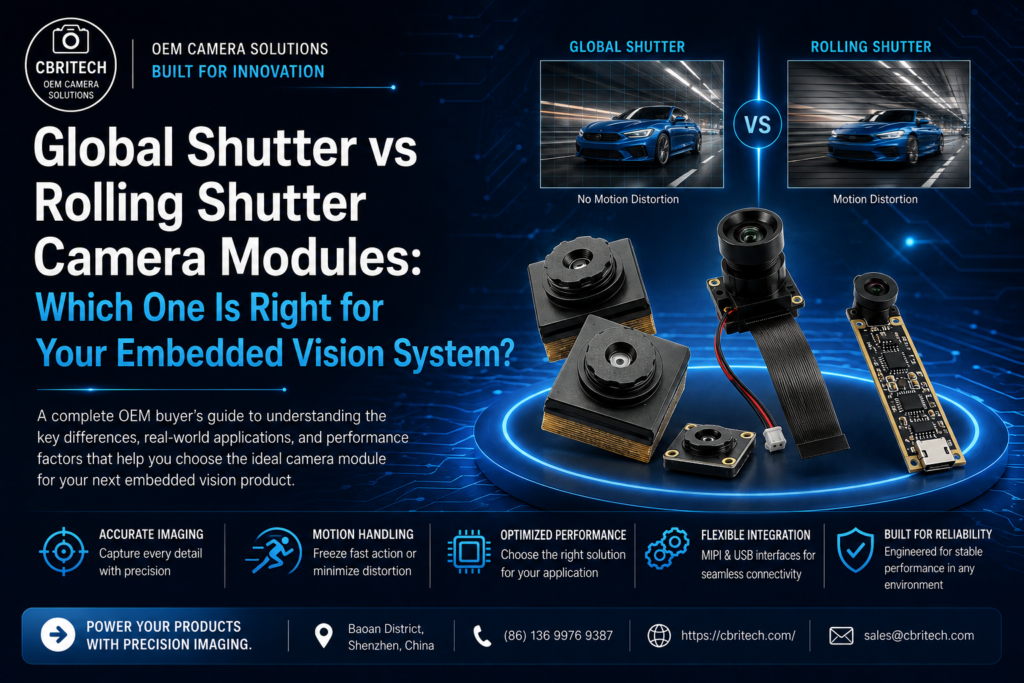
A camera can deliver the correct resolution, interface and lens yet still produce unusable data when the subject starts moving. Barcode edges lean, rotating parts appear bent, a conveyor item changes shape across the frame, or a robot estimates the wrong object position. In many embedded vision projects, these failures are not caused by the algorithm. They begin with the way the image sensor exposes the scene.
That is why shutter architecture should be treated as an early system decision rather than a specification checked after the sensor has been selected. Global shutter and rolling shutter sensors can both produce excellent images, but they capture time differently. The correct choice depends on scene motion, camera motion, exposure time, lighting, required accuracy, bandwidth, optics, processing platform and cost target.
For OEM teams evaluating a global shutter camera module, the question is not whether global shutter is universally better. It is whether the application needs every active pixel to represent the same exposure interval. This guide explains that distinction and shows how engineers and procurement teams can select the appropriate architecture for robotics, inspection, logistics, medical equipment and other embedded systems.
Contents
- Why shutter architecture matters
- How rolling shutter captures an image
- How global shutter captures an image
- Global shutter versus rolling shutter comparison
- Motion distortion and lighting interaction
- Application-based selection
- Interface, optics and processing considerations
- Building an OEM specification
- Prototyping and production validation
- Frequently asked questions
Why Shutter Architecture Matters in Embedded Vision
An image sensor does not capture an abstract scene; it samples a scene over time. If the subject and camera remain still during that sampling window, both shutter types can produce geometrically correct images. When movement occurs, the timing relationship between rows becomes important.
For a human viewing ordinary video, mild rolling-shutter distortion may be acceptable or unnoticed. For a computer-vision system, a few pixels of geometric error can change a measurement, shift a detected edge, lower OCR confidence or cause a robot to pick beside the intended target. The shutter decision therefore affects not only visual quality but also the reliability of downstream software.
The effect must also be evaluated together with exposure time. A global shutter can remove row-to-row timing distortion, but a long exposure can still create motion blur. Conversely, a fast rolling-shutter sensor operating with short exposure and limited motion may produce acceptable results. Shutter type, sensor readout speed, illumination and scene velocity form one system.
How a Rolling Shutter Camera Module Works
A rolling shutter exposes or reads the sensor sequentially, usually row by row. The top of the frame represents a slightly earlier moment than the bottom. Each row can have the same exposure duration, but its exposure begins and ends at a different time.
When the scene is stationary, this timing offset does not change geometry. When an object moves across the field of view, its position changes while successive rows are being sampled. Vertical lines may lean, circular objects may appear oval, rotating blades may bend, and vibration may create a wobbling or gelatin-like effect.
Rolling shutter remains a strong option for many products. Sensors using this architecture often provide attractive resolution, sensitivity, compact optical formats and cost efficiency. They are commonly suitable for document capture, conferencing, smart displays, microscopy, stationary inspection, access devices and applications in which motion is slow or controlled.
A rolling shutter should therefore not be rejected simply because a product includes motion. Engineers should quantify the movement, direction, exposure time and acceptable geometric error. A faster row readout can reduce distortion, and controlled strobed lighting can sometimes freeze the scene sufficiently for a rolling-shutter sensor.
How a Global Shutter Camera Module Works
A global shutter begins and ends exposure for the active pixels at the same time. The stored signal is then read from the sensor after the exposure interval. Because the complete frame represents one shared moment, moving objects retain their geometry more accurately.
This makes global shutter valuable for machine vision, robot guidance, barcode scanning, dimensional inspection, traffic imaging and other tasks in which object position or shape must be measured while the subject or camera is moving.
Global shutter does not remove every imaging challenge. Fast motion may still blur if exposure is too long. High frame rate may require more interface bandwidth and host processing. Some global-shutter sensors may involve trade-offs in resolution, pixel size, sensitivity, sensor cost or availability compared with rolling-shutter alternatives. The technology should be selected because the application requires synchronized exposure, not because it sounds more advanced.
CBRITECH’s Global Shutter Camera Modules include board-level options for high-speed and motion-sensitive applications. Projects requiring contrast-focused or machine-vision output can also compare Monochrome Camera Modules where color information is not required.

Global Shutter vs Rolling Shutter: Practical Comparison
| Selection Factor | Global Shutter | Rolling Shutter |
| Exposure timing | All active pixels share the same exposure interval | Rows are exposed/read sequentially |
| Fast moving objects | Preserves geometry more reliably | May produce skew, wobble or bent shapes |
| Stationary or slow scenes | Works well | Often works very well and may offer better value |
| Typical strengths | Motion accuracy, triggering, measurement, robotics | Resolution, sensitivity, compact format, cost efficiency |
| Lighting strategy | Short exposures and strobes commonly used | Can benefit strongly from controlled or pulsed illumination |
| Common applications | Machine vision, AMRs, scanning, metrology, traffic | Document capture, smart devices, microscopy, fixed monitoring |
| Engineering trade-offs | May cost more or require more bandwidth | Requires motion-risk assessment and readout validation |
Understanding Motion Distortion
Skew
If an object moves horizontally while rows are captured sequentially, vertical edges may lean. This is common when imaging vehicles, conveyor parts or a camera panning across a scene.
Wobble and Vibration Artifacts
When the camera vibrates, different rows record different camera positions. The image may appear to wobble even when individual frames remain sharp. This matters for drones, mobile robots and handheld equipment.
Rotational Distortion
Fans, wheels, propellers and rotating machine parts can appear curved or disconnected because their angular position changes during row readout. Algorithms trained on geometrically correct components may then misclassify the result.
Motion Blur Is a Separate Problem
Shutter architecture determines whether pixels represent the same time. Exposure duration determines how far an object travels while each pixel is collecting light. A global shutter with a 10 ms exposure can still blur a fast target. Reducing exposure normally requires stronger illumination, a wider lens aperture, higher sensor sensitivity or increased gain. The complete image-quality plan must account for all four.
Application-Based Selection
Industrial Inspection and Factory Automation
Production lines often combine moving parts, tight measurement tolerances and repeatable triggering. Global shutter is usually the safer choice when the camera must inspect products without stopping the conveyor. It helps preserve edge position for dimensional measurement, assembly verification and defect detection.
A rolling shutter may still be appropriate when parts stop at an inspection station or when lighting is strobed during a controlled pause. The decision should be based on the actual line speed, field of view, pixel scale and allowed measurement error.
Robotics, AMRs and Autonomous Equipment
Robots experience motion from both the scene and the camera. A mobile robot may turn while detecting a pallet, and a pick-and-place arm may move while estimating a component pose. Geometric consistency is often more valuable than maximum resolution. Global shutter supports more reliable visual odometry, localization, stereo correspondence and object positioning in dynamic conditions.
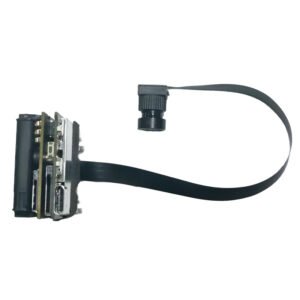
Teams integrating the camera directly with an embedded processor can compare MIPI Camera Modules for compact, low-latency designs. Where rapid PC or edge-computer integration is more important, USB Camera Modules may shorten software development.
Barcode Scanning, OCR and Smart Logistics
A barcode may occupy only a small region of the frame, and the scanner may need to decode it while a package is moving. Rolling-shutter skew can change bar spacing or distort printed text. Global shutter combined with short exposure and controlled illumination is often preferred for high-throughput logistics, parcel sorting and automated identification.
For stationary documents or cards presented to a kiosk, rolling shutter can be entirely suitable. Lens distortion, focus and uniform lighting may matter more than shutter type in those systems.
Medical and Laboratory Equipment
Medical and laboratory imaging includes both static and dynamic applications. Microscopy, slide imaging and fixed sample documentation may benefit from high-resolution rolling-shutter sensors when the subject is stable. Laboratory automation, particle analysis and moving-sample inspection may require global shutter and precise triggering.
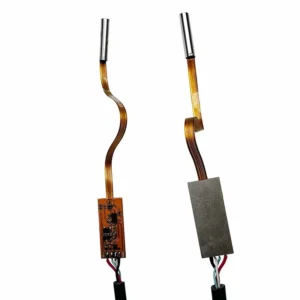
For narrow cavities or distal-tip systems, a conventional board camera may not fit. Those projects should evaluate specialized Endoscope Camera Modules where diameter, flexible interconnects, illumination and heat become primary constraints.
Security, Access Control and Smart Devices
Face recognition terminals, video doorbells and fixed smart devices often capture users who move slowly relative to the frame. A rolling shutter can provide excellent performance when the readout is fast and exposure is controlled. Dynamic range, low-light behavior, lens field of view and ISP tuning may have greater impact on recognition accuracy.
Scenes with bright entrances or backlighting should also be evaluated against purpose-built WDR Camera Modules. WDR and shutter type address different problems: WDR preserves information across brightness extremes, while shutter timing controls temporal geometry.
Interface, Frame Rate and Bandwidth
Shutter architecture does not determine the output interface. Global- and rolling-shutter sensors can be integrated into MIPI, USB and other camera designs. The interface must carry the selected resolution, frame rate, bit depth and pixel format without creating a new bottleneck.
High-frame-rate global shutter modules may generate substantial data. A 120 fps stream can require USB 3.x, multiple MIPI lanes, compression or a reduced region of interest depending on resolution and format. Engineers should request the exact supported mode rather than assuming a sensor’s maximum frame rate is available through every interface.
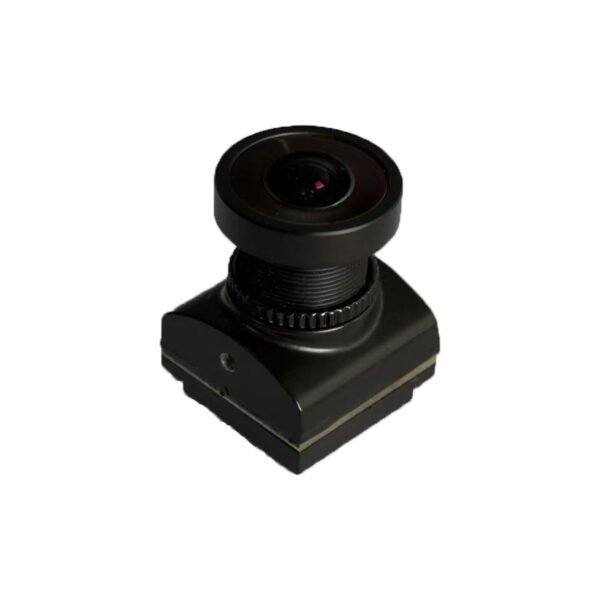
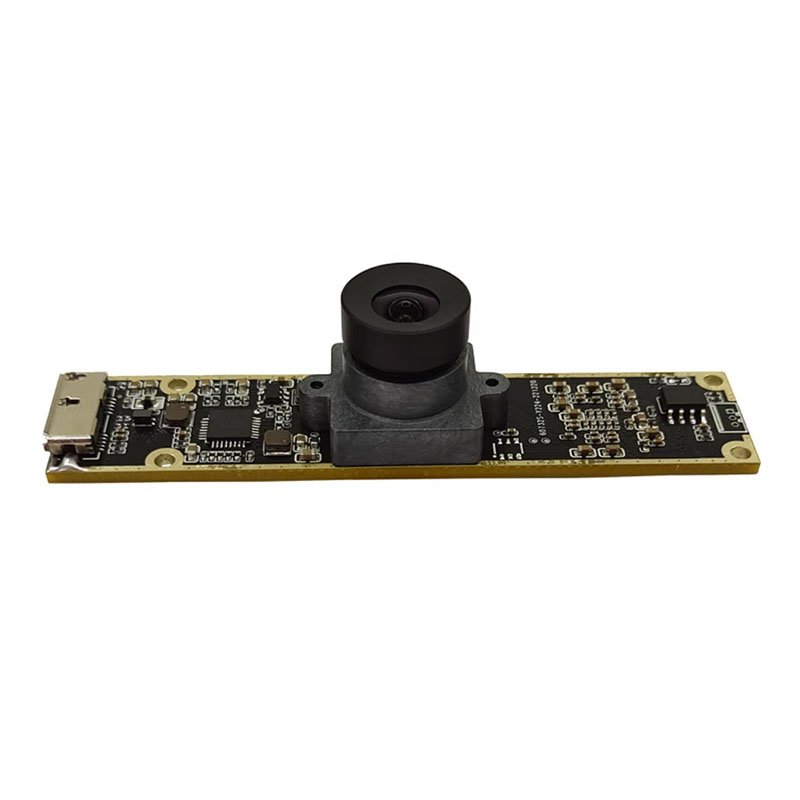
For example, CBRITECH lists a 2MP 1080P 120FPS USB 3.0 Global Shutter Camera Module for high-speed industrial and precision imaging, as well as a 120FPS USB 2.0 Monochrome Global Shutter Camera Module for applications where lower resolution and monochrome capture meet the system requirement. Product-specific output modes should always be confirmed before design freeze.
Optics, Lighting and Image Processing
A global shutter cannot compensate for an unsuitable lens or poor illumination. The lens must deliver the required field of view, focus and modulation transfer at the working distance. A wide-angle lens may capture the complete scene but reduce the number of pixels assigned to a small defect. A narrow lens may improve detail but demand tighter mechanical alignment.
Lighting should be designed to create contrast while supporting a short exposure. Industrial systems often use strobed LEDs synchronized with the camera trigger. The strobe duration can freeze motion and reduce ambient-light variation. The sensor, trigger input, light controller and host must share predictable timing.
ISP settings also influence algorithm performance. Denoising may remove fine texture, sharpening may create false edges, and automatic exposure can change between frames. Machine-vision projects often need locked or bounded controls and defined golden-image conditions rather than visually attractive automatic tuning.
How to Build an OEM Camera Specification
A useful request for quotation should describe the imaging task before naming a preferred sensor. This gives the supplier enough information to identify whether global shutter is required and which compromises are acceptable.
- Application and decision: What must the system detect, measure, identify or track?
- Motion profile: Subject speed, camera speed, direction of travel and vibration conditions.
- Working distance and field of view: Minimum, typical and maximum geometry.
- Spatial requirement: Smallest feature to detect and acceptable measurement error.
- Exposure and lighting: Ambient conditions, strobe availability and maximum exposure time.
- Output mode: Resolution, frame rate, bit depth, color/monochrome and pixel format.
- Host platform: Processor, operating system, interface and available bandwidth.
- Triggering: Free-running, software trigger, hardware trigger or synchronized lighting.
- Mechanical envelope: PCB dimensions, mounting holes, connector, cable and lens height.
- Environment: Temperature, vibration, dust, moisture and duty cycle.
- Commercial plan: Prototype quantity, annual volume, lifecycle and launch schedule.
OEM and ODM Customization Considerations
A standard module can prove sensor performance, but production hardware may require a custom PCB outline, connector orientation, cable length, lens mount, focus position, housing, trigger input, firmware descriptor or image-tuning profile. These changes should be controlled through drawings, approved samples and revision records.
Sensor lifecycle is particularly important for industrial products. Engineering and sourcing teams should confirm expected availability, approved alternatives, firmware control and change-notification procedures. Substituting a sensor or lens can change geometry, spectral response or algorithm accuracy even if the headline resolution remains the same.
CBRITECH supports OEM customization across board-level camera categories. The most effective discussion begins with a target scene, mechanical drawing, processor platform and production plan rather than a request for the highest-resolution global shutter sensor.
Prototyping, Validation and Mass Production
- Capture real moving targets at minimum and maximum operating speed.
- Compare distortion and blur at the planned exposure time and lighting level.
- Validate every required resolution, frame rate and pixel format on the production host.
- Test hardware trigger latency, jitter and strobe synchronization where applicable.
- Measure dropped frames and recovery after cable, CSI or application errors.
- Check focus consistency, lens retention and vibration performance.
- Test image quality across temperature and enclosure heating conditions.
- Compare multiple pilot units to confirm optical and sensor consistency.
- Validate algorithm accuracy with production-intent ISP settings, not only a visually pleasing demo image.
- Approve golden samples, firmware identification and supplier change controls before mass production.
The correct shutter choice should be demonstrated by application data. A side-by-side test using the real target, speed, lens, lighting and host platform is more valuable than a generic claim that one architecture is always superior.
Common Selection Mistakes to Avoid
- Assuming high frame rate automatically eliminates rolling-shutter distortion.
- Choosing global shutter but allowing an exposure long enough to create motion blur.
- Selecting by megapixels without calculating target pixels and bandwidth.
- Ignoring the direction and speed of motion relative to sensor readout.
- Testing only under bright bench lighting rather than production illumination.
- Leaving trigger and strobe timing until late in development.
- Approving one sample without checking pilot-batch consistency and lifecycle risk.
- Using automatic image settings when the vision algorithm requires repeatable input.
Which Shutter Should You Choose?
| Application Condition | Recommended Starting Point |
| Fast conveyor, rotating parts or moving measurement target | Global shutter |
| Robot or camera moving during image capture | Global shutter |
| Stationary subject with high resolution or low-light priority | Rolling shutter |
| Document capture or fixed kiosk geometry | Rolling shutter often sufficient |
| Controlled stop-and-capture station | Either; validate cost and image quality |
| Strobed illumination with precise timing | Either may work; test the complete timing chain |
| Uncertain motion profile or tight measurement tolerance | Prototype both and compare algorithm results |
Why Work With CBRITECH?
CBRITECH supplies USB, MIPI, CMOS sensor, feature-specific, endoscope and thermal camera modules for OEM applications. This broader range allows engineering teams to compare shutter architecture together with interface, lens, resolution, frame rate and mechanical design instead of treating each decision separately.
Begin by reviewing the available Global Shutter Camera Modules and share the target speed, field of view, working distance, host platform and lighting plan with the engineering team. When the application does not require synchronized exposure, the team can also evaluate alternative CMOS Sensor Camera Modules that may offer a better balance of resolution, sensitivity and cost.
Frequently Asked Questions
Is global shutter always better than rolling shutter?
No. Global shutter is preferred when motion geometry matters. Rolling shutter may offer strong resolution, sensitivity, compact size and cost advantages for stationary or controlled scenes.
Does a high frame rate eliminate rolling shutter distortion?
Not necessarily. Frame rate and row readout time are related but not identical. A sensor can produce many frames per second while still exposing rows at different moments. Validate the specific sensor mode.
Can a global shutter image still be blurred?
Yes. Global shutter removes row-to-row temporal distortion, but motion blur occurs when the subject moves during the exposure interval. Shorter exposure and stronger lighting may be required.
Which shutter is better for robotics?
Global shutter is commonly preferred for moving robots, visual odometry, stereo vision and pick-and-place tasks. Rolling shutter may be suitable for stationary observation or slower interactions.
Can rolling shutter be used for machine vision?
Yes. It can perform well when the object is stationary, moves slowly, stops for capture or is illuminated by a precisely controlled strobe. Application testing is essential.
Should I choose USB or MIPI for a global shutter module?
Choose according to the host architecture. USB can simplify PC and edge-computer integration, while MIPI supports compact direct connection to embedded processors. Confirm bandwidth, driver support and triggering requirements.
What should I send to a camera-module supplier?
Provide the application, target speed, field of view, working distance, smallest feature, lighting, exposure, frame rate, interface, host platform, mechanical limits, environment and expected production volume.
Select the Shutter Around the Real Motion in the System
Global shutter and rolling shutter are not competing quality grades. They are different timing architectures designed for different imaging conditions. Global shutter is usually the correct starting point when the scene or camera moves and geometric accuracy must be preserved. Rolling shutter remains a practical and often advantageous choice when subjects are stationary, motion is controlled, or resolution and low-light performance carry greater weight.
The final decision should be supported by tests using the production-intent sensor, lens, lighting, exposure, interface and algorithm. That approach turns shutter selection from a marketing comparison into an engineering decision.
To discuss a robotics, industrial inspection, logistics, medical or embedded vision project, contact CBRITECH with your application requirements. The team can help identify a suitable reference module and evaluate the OEM changes needed for reliable production.