
BLOG

Camera Module
Britech

Crucial Tips to Consider When Looking for a Camera Module Supplier

One of the most crucial decisions you will ever make is selecting a new supplier, mainly if you rely on imported items. In this case, increased sales and dependable service can result from a positive working relationship. On the other hand, customers may be dissatisfied, earnings may not be realized, and a business may fail due to a terrible collaboration in the worst situation. To assist you in selecting a professional camera module supplier, consider the below aspects. Trust us; you will never go wrong when exploring your options with the following tips. Value for money: The cost may be a crucial factor in selecting a supplier if you are a start-up. Cheap providers, though, aren’t always the best investment. You must decide how much you are willing to pay for your camera modules if you want dependability and quality from your providers. Remember, finding the right mix between price, reliability; quality, and service is crucial. Excellent service and effective communication: Did you know that a solid working relationship with your supplier depends on effective communication? As a result, your camera module supplier should maintain open lines of communication throughout the whole process from the initial briefing to ongoing feedback and scheduled maintenance. Also, they must deliver on schedule or be truthful and give you plenty of notice if they can’t. Quality: Typically, cost and quality frequently go hand in hand. How? In that the more expensive the product, the higher the quality. Nevertheless, you want to ensure that your expectations are met because there is still a predetermined, agreed-upon standard of quality that applies regardless of price. For instance, since your supplier sent you something entirely different, marketing your goods as high-end is the last thing you want to do. Therefore, always speak with them to ensure that you are fully informed of what possible vendors will offer you. A professional camera module supplier will ensure you get quality products on time. Speed and flexibility: Lastly, you can avoid using too much working capital in inventory by being able to place frequent, minor orders. Flexible suppliers make it easier for you to react rapidly to evolving consumer needs and unexpected emergencies. In addition, suppliers who provide speedy delivery will be more competitive than those who compete only on other aspects, such as price, if you want to reduce the time it takes you to serve your clients. Keep in mind, the demands and goals of your company should be the center of effective purchasing. Therefore, finding a supplier is ultimately not a choice to be made lightly and it may take some effort to discover the appropriate fit. Cbritech.com is your trusted camera module supplier you can rely on. Visit our website for more information.

Read More »
Endoscope Camera Module
Britech

What Makes a Quality Endoscope Camera Module?

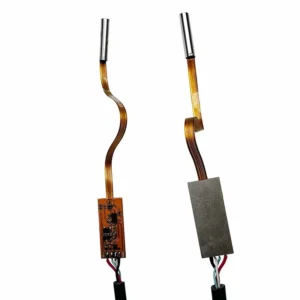
Endoscopes: The first effective endoscope was developed in 1853. Back then they were mainly used in medicine. Now they are widely used in many sectors in the world today. Are you thinking of getting one? Maybe you are wondering how you can pick the best endoscope camera module. These are some of the things to look for and ensure you get the best quality product. Compatibility: This is the most important thing to consider and should be the first thing too. A quality endoscope module should be compatible with however you intend on using it. Some work via Wi-Fi with smartphones and others via USB. When you intend on using it outdoors use the one compatible with phones (Wi-Fi), if your work is generally indoors it is better to use a USB. Camera quality: Well, it is a camera, and most people like cameras with good quality. Most endoscopes are used professionally, thus camera quality should be good.  The endoscope camera module should be able to provide an image quality between 720p and 1080p. These are the best quality that you can get from an endoscope. Outer diameter: The diameter is another important thing to look out for. So what diameter makes a quality endoscope? A 2.0mm endoscope camera module is the preferable diameter. This will enable you to get your endoscope anywhere, this saves you money because you will not require different diameters for different tasks. Image sensor: An image sensor detects and conveys information used in making an image. This plays an important role in the endoscope camera module. A quality module has a CMOS image sensor which helps to give the image or images more quality. Lens: The lens is an important feature when it comes to any camera. The lens decides the quality of the output image. There are a lot of lenses that are used in endoscope camera modules. You can contact a camera module supplier to get the surest information on the best lens for an endoscope and get the best quality. Price: Most people say that you should be willing to spend money to get good quality. Truthfully speaking not all expensive products are of good quality. To get the best and most reasonable prices, visit cbritech.com. To summarise, these are the main things to look out for when you need a quality endoscope camera module. Having a quality product will help you with your work. Contact cbritech.com, a camera module supplier, and get you an endoscope camera module.

Read More »
Camera Module
Britech

Factors to Consider When Choosing a Camera Module

The camera has become one the greatest invention in this age, and despite a lot of completion with improvements in the smartphone’s camera, there has been no lax in the development of the mainstream camera. Besides when you select a camera for your work make sure that you’re choosing the best camera module that will fulfill your desire. Below are the considerations to help you obtain great results. Sensor: The image sensor is what detects and conveys information used to make an image. The sensor is one of the major keys to consider in the camera module. Professional camera module supplier offers the best camera modules that have the best sensor hence good quality image. Keep in mind that sensors play an important role whether in the smartphone camera or digital camera. As we all recognize, the higher the pixel of the sensor, the bigger the size of the captured photo. The quality of sensors used by different manufacturers is different hence the need to understand the different types of sensors. Size: The major parameters that have been calculated with the camera module are the dimensions that varies the most for different requirements, depending on size and optical format. It has been a field of view and focal length for accessing object dimension calculation. It involves back length and includes a perfect lens for format. The optical size must fit your application. With hundreds of camera modules application, module dimension represents the factor that varies the most. Lens: The lens is also another aspect to take into consideration when selecting a 2.0mm Endoscope Camera Module. The lens plays an important role in the quality of the light that incidents on the image sensor and thereby decides the quality of the output image. Well, there are a few number of parameters you should look into when choosing a lens for your 2.0mm Endoscope Camera Module. Angle of view   Mount type Keep in mind that the lens is the product that creates an image of a subject on the sensor. 4. Compatibility: Check if the camera module you select is compatible with the platform, or more precisely, the SOC (system on chip) that the certain device is using. 5. Prices: The cost of the product depends on the specification. With constant demand and personalization requirements like a lens, size, and sensor a customized camera module is your best option at ribritech.com. We hope you got a clear understating of the above parameters that will help you select a good camera module that fits your needs.

Read More »
IR CUT CAMERA MODULE 2MP Fixed Focus 1080P DVP USB Camera Module
Purchase Guide
Britech

What is IR-CUT and its functions?

1. What is IR-CUT? IR-CUT (infrared cut) double filters are a set of filters built into the camera. When the infrared sensor of the camera detects the change in light intensity, the built-in IR-CUT will automatically switch according to the light intensity to achieve the best effect. 2. When should IR-cut be used? If your application have high requirements for images. They require that the images should not be color biased during the day, and the infrared light should be used to supplement the light for good night vision. Ir-cut is required. Currently, THERE are three main applications of CMOS: 1) It is used in situations where lighting is not needed, such as hotel lobbies, 24-hour convenience stores, etc., where there is sufficient light source for 24 hours; 2) Where white light is used to fill the light, such as road monitoring, the image should always be in color; 3) in the case of using infrared lamp to fill the light, such as school monitoring, residential monitoring, etc., it is necessary to fill the light and need to have a certain concealing, so as to have less interference to the surrounding environment. At present, IPC network camera must use ir-cut for the third) scene. For the first) scene, it can be considered to choose IR-cut to enhance the degree of color restoration. 3. Special requirements for using IR-cut When using IR-CUT with IR LED, there must be a synchronous signal output to the CMOS board to “tell” the CMOS board whether the current INFRARED light is on or off, which is required by all CMOS with INFRARED light and IR-CUT at present. The indicator board needs to output a synchronization signal to the CMOS board. The output is 0V when the infrared light is off, and 3.3V when the infrared light is on. The output cannot be higher than 3.3V; otherwise, the main control board will be burned. For more information, welcome to contact. Website: www.newcameramodule.comWebsite:www.cbritech.comEmail: info@cbritech.com

Read More »
Purchase Guide
Britech

What is RGB-IR?

RGB is the color mode, representing Red, Green and Blue respectively, which is the most widely used color mode.IR is an Infrared light whose wavelength is longer than that of red light.In low light, use IR camera to enhance reality effect. Traditional COMS image sensors use Bayer format as Color Filter Array (CFA). The Color information of pixels is determined according to the specific wavelength of light. Rgb-IR technology uses RGB-IR CFA, based on Bayer format, to modify part of the pixels to IR pixels, which only allow infrared light to pass through. Using RGB-IR technology, RGB color images and IR images can be captured simultaneously by one same sensor device,which can get both day vision and night vision. RGB-IR technology functions RGB-IR technology was originally introduced to solve the problem of switching between day and night modes in the application of surveillance cameras, and the mechanical-controlled IR-CUT was introduced to solve the problem of infrared interference in RGB mode. For more information, welcome click our OV5640 DVP IR-Cut Camera Module and USB 2.0 UVC IR-CUT Camera Module.

Read More »
Purchase Guide
Britech

What is the wide dynamic of the camera? What are the main applications?

What is the wide dynamic? Wide dynamic range means that the brightest and darkest parts of the scene can be seen clearly at the same time. Wide dynamic range is the ratio of the brightest signal value that the image can distinguish to the darkest light signal value that can be distinguished. Wide dynamic technology is a technology used to let the camera see the characteristics of the image under very strong contrast. When the high brightness areas illuminated by strong light sources (sunlight, lamps or reflections, etc.) and relatively low brightness areas such as shadows and backlights exist in the image at the same time, the bright areas of the camera will become white due to overexposure, while the dark areas will become black due to underexposure, which seriously affects the image quality. There are limitations in the camera’s performance of the brightest and darker areas in the same scene, which is commonly known as “Dynamic Range”. What are the main applications? The main application fields of wide dynamic camera.Car toll system: at present, the focus of low illuminance and wide dynamic camera for road monitoring is the highway toll monitoring system, the lane of toll station, toll parking lot and apartment parking lot. Electronic police system: low-illumination wide-motion cameras play a huge role because of the need for 24-hour continuous monitoring and seeing the license plate clearly. Urban commercial street and its periphery: monitor areas with obvious light changes, including some applications in urban commercial streets, in order to grasp the traffic situation of some busy intersections, the operation of vehicles around the road section, the flow of pedestrians and traffic security and other issues. Bank systems : monitor the automatic door of the bank and the door of the ATM door. Here allow us to introduce our Wide dynamic range camera module, MIPI interface or USB interface are available, single lens or dual lens are acceptable too. USB2.0 Wide dynamic range dual lens camera module MIPI Interface Wide dynamic range dual lens camera module For more information, welcome to contact. Website: www.newcameramodule.comWebsite:www.cbritech.comEmail: info@cbritech.com

Read More »
camera module 4k 13mp uvc usb camera module
Purchase Guide
Britech

What kinds of camera module is suitable for high-speed photographic apparatus?

High-speed photographic apparatus is an instrument that can take pictures of documents and paper to replace scanners, connect printers, and operate computers. So what kinds of camera module can be used for high-speed photographic apparatus, which often confused some customers. Today we are going to introduce about what kinds of camera module is suitable for high camera equipment. The camera module of the high-speed photographic apparatus device need to meet the following points: 1. The pixel should not be less than 5 Megapixel. 2. Great image effect 3. Exposure controlled or automatic 4. Automatic brightness adjustment/Contrast/Color Hue/saturation/Definition/Gamma/White balance/Exposure and so on 5. Need LED fill light device 6. No distortion lens 7. Standard USB2.0 interfaces Here allow us to introduce our USB2.0 Sony IMX179 CMOS Sensor 8MP Camera Module. It is developed for high-speed photographic apparatus device. The camera module as the picture show. 1. 8MP Sony IMX179 CMOS Sensor 2. High sensitivity, low dark current, and no smear are achieved through the adoption of R, G, and B primary color pigment mosaic filters 3. Exposure controlled or automatic 4. Automatic brightness adjustment/Contrast/Color Hue/saturation/Definition/Gamma/White balance/Exposure and so on 5.6PCS LED fill light design 6. 76° No distortion lens( you can also choose 80°, 90° lens),can shoot A3, A4, A5, A6 paper , passport and so on 7. Standard USB2.0 Interface If you want more inforamtion, welcome to contact. Website: www.newcameramodule.comWebsite:www.cbritech.comEmail: info@cbritech.com

Read More »
CMOS Sensor Camera Module
Britech

The Difference of camera module interface for DVP & MIPI-CSI

What is MIPI interface ? MIPI is differential serial transmission, fast speed, anti-interference. Currently divided into D/C/M PHY categories. The main mobile modules now use MIPI_ DPHY or CPHY transmission: DPHY transmission uses 4 pairs of differential signals to transmit image data and a pair of differential clock signals. CPHY uses three sets of three single-ended signals to transmit data. Each single-ended signal can represent three logic levels, with a higher data transmission rate and fewer pins. MIPI is LVDS low voltage differential serial port, only need CLKP/N, DATAP/N — maximum support 4-lane, general 2-lane can be done. MIPI interface has fewer signal lines than DVP interface. Because it is a low-voltage differential signal, it produces little interference and has strong anti-interference ability. The MIPI camera has three power supplies: VDDIO (IO power supply) AVDD (Analog power supply) DVDD (Core digital power supply) Different sensor cameras have different power supply, AVDD has 2.8V or 3.3V; DVDD generally uses 1.5V or higher, different manufacturers have different designs, 1.5V May be provided by the sensor or external supply, if external power supply can be used, it is recommended to use external supply, the voltage should be greater than the internal DVDD; VDDIO voltage should be consistent with the level of MIPI signal line. If the signal line is at 2.8V level, VDDIO should also be supplied with 2.8V. Some sensors can also provide VDDIO from the inside without VDDIO. What is CSI and DSI ? The camera interface of MIPI is called CSI and the display interface of MIPI is called DSI. 5MP can also reluctantly use DVP, 8MP Sensor and above are MIPI interface. What is DVP inteface ? DVP is parallel port transmission, the speed is slow, the transmission bandwidth is low, use needs: PIN OUT Description PCLK Pixel clock MCLK(XCLK) External clock input VSYNC Vertical synchronization HSYNC Horizonal synchronization D[0:11] Parallel port data can be 8/10/12bit data size

Read More »

We will contact you within 1 working day, please pay attention to the email with the suffix “@cbritech.com”

One Request, Multiple Quotes