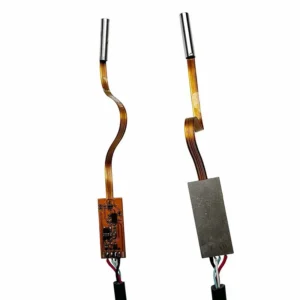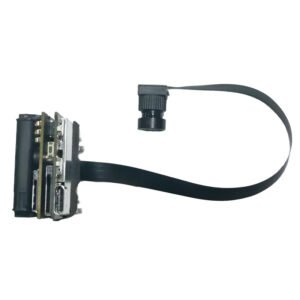

Pick up almost any modern embedded camera datasheet and you will meet two acronyms within the first page: DVP and MIPI. They describe how the image gets from the sensor to your processor, and choosing the wrong one is one of the most expensive mistakes in a camera project. It can mean a processor that physically cannot connect to the sensor, a board with far too many traces, or a video stream that stutters because the link is too slow.
This guide explains the difference in plain terms, then walks through real module choices for microcontroller boards, IoT devices, doorbells, wildlife cameras and drones. It comes from the team at Shenzhen Brilliant CMOS Technology Co., Ltd., where we design and supply OEM and ODM camera modules, so it focuses on the decisions that actually cause problems in development.
In this guide
- What a CMOS sensor does, and what the module adds
- DVP vs MIPI: the core difference
- Which interface does your processor support?
- OV5640: the versatile 5MP workhorse
- STM32 and microcontroller camera projects
- ESP32 camera and Arduino projects
- A compact 2MP option for IoT and cost-sensitive products
- IR-cut cameras for doorbells and day/night use
- Wildlife and bird watching cameras
- 4K modules for IoT, drones and advanced imaging
- Module comparison at a glance
- A practical selection checklist
- Frequently asked questions
1. What a CMOS sensor does, and what the module adds
The cmos sensor is the chip that turns light into an electrical signal. Millions of tiny light-sensitive pixels each measure how much light reaches them, and the chip reads those values out as image data. CMOS sensors dominate modern cameras because they are low-power, fast and cheap to manufacture, and they can integrate image-processing functions on the same chip.
But a bare sensor is not a camera. A camera module adds everything else you need to get a usable picture:
- A lens matched to the sensor, with the right field of view and focus type
- A focus mechanism, either fixed focus or an autofocus actuator
- An infrared filter (or an IR-cut arrangement) so colours look natural
- A flexible cable or connector to link the module to your board
- A tested, tuned assembly, so every unit behaves consistently
Buying a module rather than a bare sensor saves months of optical design, alignment and tuning. That is exactly why embedded teams choose modules.
2. DVP vs MIPI: the core difference
DVP (Digital Video Port) is a parallel interface. It sends pixel data across a bundle of separate wires at once (commonly 8 or 10 data lines), accompanied by a pixel clock and synchronisation signals for lines and frames.
MIPI CSI-2 is a serial interface. It sends data as high-speed differential pairs called lanes, typically one, two or four, plus a clock pair. Fewer wires carry far more data.
Here is what that means in practice:
| DVP | MIPI CSI-2 | |
| Signal type | Parallel, single-ended | Serial, differential lanes |
| Typical pin count | High (often 20 or more connections) | Low (a few signal pairs) |
| Bandwidth | Modest | High, scales with lanes |
| Typical resolutions | Up to a few megapixels, lower frame rates | Multi-megapixel up to 4K and beyond |
| Board design | Easy to prototype, but many traces | Needs careful controlled-impedance routing |
| Processor support | Common on microcontrollers | Common on application processors and newer SoCs |
| Cable length and noise | Short runs preferred | Better for longer runs and noise immunity |
The short version: DVP is simple and widely supported on small processors but limited in speed and wire-hungry. MIPI is the modern choice for high resolution and frame rate, but needs a processor with a MIPI CSI-2 receiver and more careful PCB design.
3. Which interface does your processor support?
This is the question to answer first, because it decides everything else. A camera interface is a hardware block on the processor. If your chip does not have a MIPI receiver, no software can add one.
- Many microcontrollers provide a parallel camera interface, so DVP modules connect directly.
- Application processors and modern SoCs, such as those on single-board computers and smart devices, typically include MIPI CSI-2 receivers.
- Some processors have both, which gives you the freedom to choose by performance and cost.
Always check the exact part number in the manufacturer’s reference manual: not just the family. Interface availability can differ between variants of the same product line. If your processor has only DVP but you need MIPI-class sensors, discuss bridge or alternative architectures with our team early.
4. OV5640: the versatile 5MP workhorse
If you search for an OV5640 camera module, you are looking at one of the most widely used 5-megapixel sensors in embedded design. Its popularity comes from solid image quality for its class, broad software support, autofocus options on many modules and a long history in products.
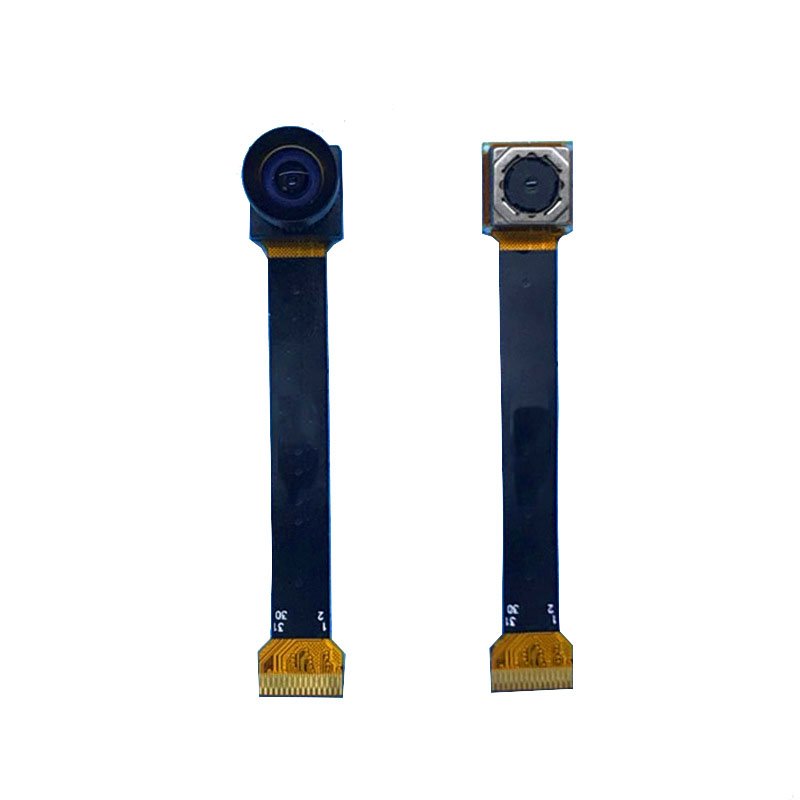
Our 5MP OV5640 CMOS sensor DVP camera module with a 24-pin interface is a straightforward choice for projects with a parallel camera port. It also serves as a compact camera module for products where space and board area are limited, while still giving a clear step up from VGA and 2MP options.
If your design needs both interface options or an IR-cut filter, see our 5MP fixed-focus OV5640 / OV5648 OEM MIPI/DVP IR-cut camera module, which is offered for OEM customisation across interface styles.

What to check on any OV5640-based module
- Frame rate at full resolution. Full 5MP frame rates on a parallel interface are lower than at reduced resolutions, so confirm the mode you need.
- Focus type. Fixed focus is robust and cheap; autofocus helps when subject distance varies.
- Connector pinout. Confirm the 24-pin pin order against your board to avoid a costly layout error.
- Clock and power requirements. The sensor needs an input clock and several supply voltages, so review them against your power design.
5. STM32 and microcontroller camera projects
Searching for an STM32 MIPI camera usually means one of two things: someone using an STM32 microcontroller with a camera port, or someone choosing a sensor for a newer STM32 part that supports a serial camera interface. The distinction matters.
Many STM32 microcontrollers provide a parallel camera interface (the DCMI peripheral), which pairs naturally with DVP modules. Newer, higher-end STM32 devices and some STM32 microprocessors add MIPI CSI-2 support. Check your exact part’s reference manual to see which interface it provides.
Our 5MP OV5640 / OV5648 MIPI/DVP IR-cut module is aimed at OEM projects that need flexibility between interface types.
Tips for STM32 camera designs
- Memory first. A 5MP frame is large. Check that your external memory and bus bandwidth can hold and move the data, or capture at a lower resolution.
- Use hardware features. DMA, JPEG compression and display pipelines reduce CPU load.
- Start with a known-good reference. Bring up a proven module on an evaluation board before moving to your own PCB.
6. ESP32 camera and Arduino projects
The esp32 camera has become a favourite for hobbyists and low-cost IoT products: a Wi-Fi capable microcontroller board with a small camera attached, available for very little money. The ESP32 family uses a parallel camera interface, so DVP modules are the natural match.
Our ESP32-CAM OV2640 2MP DVP camera module is the type of module most ESP32 camera projects use. It also works as an ESP32 Arduino camera module for makers programming through the Arduino environment.
What the ESP32 camera is good at, and what it is not:
- Good: low-cost Wi-Fi snapshots, simple streaming, time-lapse, remote monitoring, learning projects and prototypes
- Limited: high frame rates, high resolutions and heavy on-device image processing, because the microcontroller has limited memory and processing power
- Watch out for: Wi-Fi bursts and the camera together draw noticeable current, so a weak supply causes brown-outs and corrupted images
For a commercial product, move beyond a hobby board: plan antenna placement, power stability, enclosure design and firmware updates from the start.

7. A compact 2MP option for IoT and cost-sensitive products
Not every product needs 5MP or 4K. For smart-home sensors, kiosks, meter readers and basic monitoring, 2MP is often the sweet spot: clear enough, light on bandwidth and low cost.
Our 2MP GC2145 CMOS sensor OEM MIPI camera module pairs a 2MP sensor with a MIPI interface, which suits application processors and boards that have a MIPI receiver but do not need high resolution. Because the stream is small, it is easy on memory and power. For a lot of IoT products, choosing a modest resolution and spending the savings on better lenses and lighting gives a better result than a bigger sensor.

8. IR-cut cameras for doorbells and day/night use
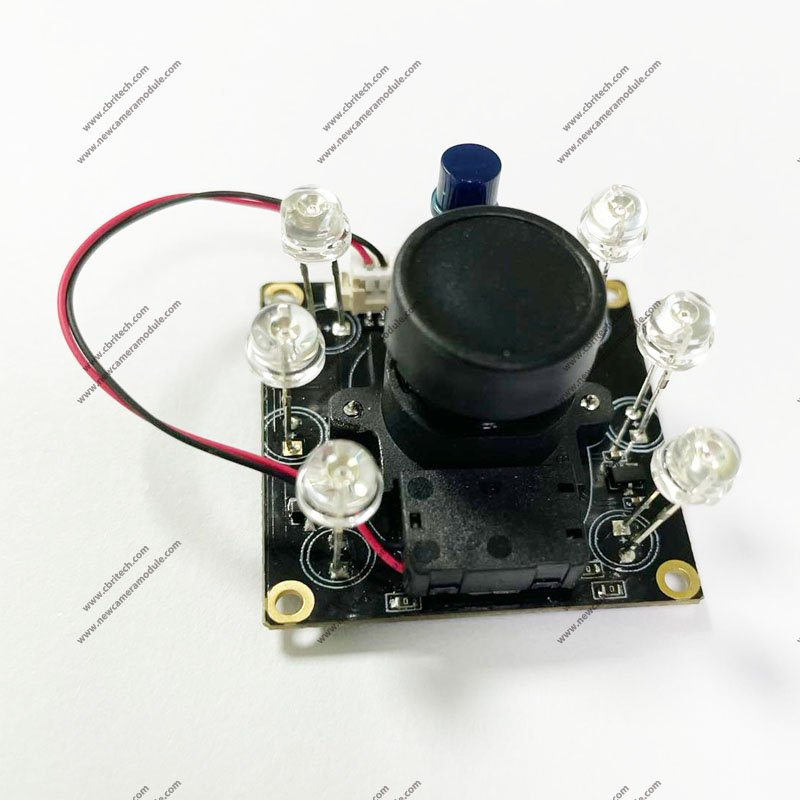
An IR cut video doorbells camera has a particular problem to solve. Silicon sensors are sensitive to infrared light, which the human eye cannot see. In daylight that invisible light washes out and tints colours. At night, however, infrared illumination lets the camera see in the dark.
An IR-cut filter blocks infrared in the daytime so colours look natural. For night operation, many designs switch the filter out of the way or use a separate infrared mode, often combined with infrared LEDs.
Our 5MP fixed-focus OV5640 / OV5648 OEM IR-cut camera module is built for products that need IR-cut behaviour, such as video doorbells and entry cameras.
For video doorbell designs, also plan for:
- Wide field of view, so visitors and parcels on the step are all in frame
- Backlight handling, because people often stand in front of bright skies
- Power budget, especially for battery-powered designs
- Enclosure window design, including glare from infrared LEDs reflecting inside the housing
9. Wildlife and bird watching cameras
A bird watching camera faces conditions that office webcams never see: dawn and dusk light, motion, weather and long unattended operation.
Our 4MP CMOS GC4663 / GC4653 IR-cut MIPI camera module pairs a 4MP sensor with IR-cut operation over MIPI. Four megapixels give enough detail to identify a bird at a feeder, while keeping the data rate and power use manageable for a battery or solar-powered nest-box or trail camera.
What matters for wildlife and bird cameras:
- Low-light sensitivity. Many visits happen at dawn and dusk.
- IR-cut and night capability. Nocturnal animals need infrared support.
- Lens choice. A wider lens covers a feeder; a narrower one is needed for distant subjects.
- Trigger speed. Fast wake-up and capture avoids missing a quick visit.
- The module sits inside your housing, so the enclosure must handle rain, condensation and temperature swings.
10. 4K modules for IoT, drones and advanced imaging
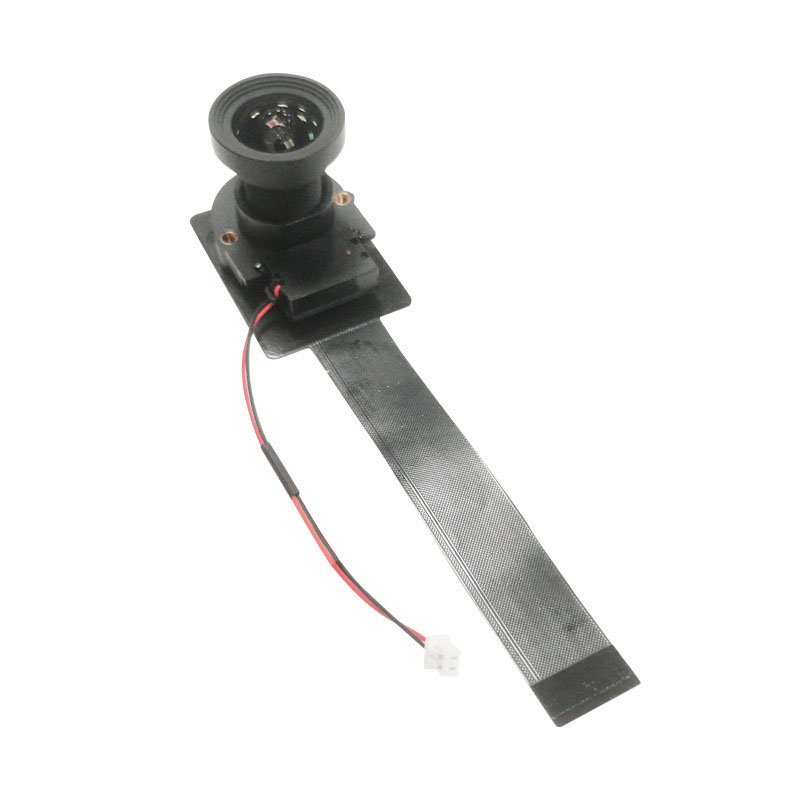
When detail truly matters, 4K-class sensors from Sony are a popular choice because of their strong low-noise performance and colour accuracy. Both modules below use a MIPI interface, which is essential for the bandwidth involved.
IoT and smart devices. Our 12MP 4K CMOS Sony IMX362 MIPI camera module is aimed at the IoT 4K Sony camera module niche: smart devices, inspection tools and applications where high detail is needed at the edge.
Drones. For anyone designing a drone with camera 4k, the decisive factors are weight, power, image stabilisation and a clean video pipeline. Our 4K 13MP CMOS Sony IMX214 MIPI camera module gives a compact, MIPI-connected 4K-class option. It also suits manufacturers who want a best budget drone with 4k camera positioning without paying for a larger, heavier camera.
Things to know before choosing a drone camera
- Rolling shutter effects. Vibration and fast movement can cause wobble in the footage unless you add mechanical damping or stabilisation.
- Processing power. 4K video needs a capable encoder on your flight or video board.
- Weight and balance. Every gram matters for flight time.
- A small enclosure cooks a 4K sensor and encoder quickly, so plan airflow or heat spreading.
- Local regulations. Drone rules vary by country, so confirm requirements for your target markets.
11. Module comparison at a glance
Specifications come from our product pages. Please confirm final details with our team before ordering.
| Use case | Module | Sensor | Interface |
| Compact general embedded | 5MP OV5640 DVP, 24-pin | OV5640, 5MP | DVP |
| STM32, doorbells, flexible OEM | 5MP OV5640 / OV5648 IR-cut | OV5640 / OV5648, 5MP | MIPI / DVP |
| ESP32 and Arduino | ESP32-CAM OV2640 2MP | OV2640, 2MP | DVP |
| IoT, cost-sensitive | 2MP GC2145 OEM | GC2145, 2MP | MIPI |
| Wildlife and bird cameras | 4MP GC4663 / GC4653 IR-cut | GC4663 / GC4653, 4MP | MIPI |
| 4K IoT | 12MP Sony IMX362 | Sony IMX362, 12MP | MIPI |
| 4K drones | 13MP Sony IMX214 | Sony IMX214, 13MP | MIPI |
12. A practical selection checklist
Work through these before you order samples:
- Which camera interface does your exact processor part support? DVP, MIPI or both.
- What resolution and frame rate do you really need? Do not pay for bandwidth you cannot process.
- How much memory and processing power do you have? Frames are large, so check buffers and encoders.
- What is the lighting? Day only, or day and night? This decides IR-cut and sensor sensitivity.
- Fixed focus or autofocus? Fixed focus for predictable distance; autofocus for variable distance.
- What are the size, weight and connector limits? Tell us early so we can customise.
- How is it powered? Battery, solar or mains changes your power budget.
- What is your volume and product lifetime? Stable sensor supply matters for long-lived products.
Common mistakes we see:
- Choosing a MIPI sensor for a processor with no MIPI receiver
- Underestimating the memory needed to hold full-resolution frames
- Using a hobby-grade ESP32 board design in a commercial product without redesigning power and antenna
- Ignoring infrared behaviour until the first night test
- Mis-matching the connector pinout between module and board
13. Frequently asked questions
What is the difference between MIPI and DVP?
DVP sends image data over many parallel wires and suits simpler, lower-bandwidth designs. MIPI CSI-2 sends data over fewer high-speed serial lanes and suits high resolutions and frame rates. Your processor’s hardware decides which you can use.
Can I connect a MIPI camera to a microcontroller with only a DVP port?
Not directly. The processor needs a MIPI CSI-2 receiver. Talk to our team about bridge options or choose a DVP module for that board.
Is the OV5640 still a good choice?
Yes, for many projects. It offers good image quality for 5MP, broad software support and long-standing availability. For higher resolutions or frame rates, look at MIPI-connected sensors.
Can an ESP32 camera record 4K video?
No. The ESP32 family is designed for low-cost, low-resolution imaging. For 4K, you need an application processor with a MIPI receiver and a video encoder.
What does an IR-cut filter do?
It blocks infrared light in the daytime so colours look natural. For night use, many designs remove or bypass the filter and use infrared illumination.
Which module suits a drone camera?
A compact MIPI 4K-class module, such as our Sony IMX214 module, is a common starting point. Weight, heat and stabilisation matter as much as the sensor.
Can you customise the module?
Yes. We support OEM and ODM customisation, including lens field of view, focus type, cable length, connector, IR-cut options, logo and packaging.
Talk to an engineer before you commit
Matching the sensor, interface and optics to your processor early saves weeks of rework. Shenzhen Brilliant CMOS Technology Co., Ltd. supplies OEM and ODM camera modules for embedded boards, IoT devices, doorbells, wildlife cameras and drones, with sample support and engineering input from your first schematic.
- Browse the full range at cbritech.com
- Send your processor part number, resolution, frame rate and volume, and we will recommend a module
Specifications are provided for guidance and may be updated. Please confirm final parameters with our team before placing an order. Drone and surveillance-style products may be subject to local regulations in your market.