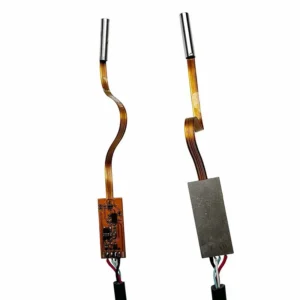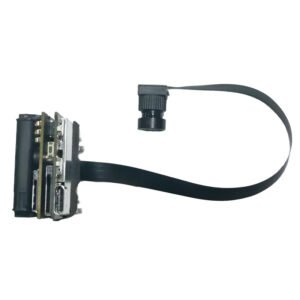

If you are designing a diagnostic scope, a dental handpiece, or an industrial inspection tool, the camera at the tip is the part everything else depends on. A great housing, a polished app and a clever lighting design all fail if the image sensor behind a few millimetres of glass is wrong for the job.
This guide is written for product managers, hardware engineers and sourcing teams who need to choose an endoscope camera module and want straight answers, not brochure language. We build camera modules at Shenzhen Brilliant CMOS Technology Co., Ltd., so we see the same selection mistakes again and again. Here is what we wish every buyer knew before sending the first inquiry.
In this guide
- What an endoscope camera module actually is
- Why diameter is the first decision
- Sensor and resolution: why 720p is still the workhorse
- USB, and why it simplifies development
- Lighting: the LED question most teams underestimate
- Medical endoscope cameras: what the module can and cannot promise
- Dental and ENT: the intraoral camera use case
- Industrial inspection and borescope cameras
- Model comparison at a glance
- A practical selection checklist
- Frequently asked questions
1. What an endoscope camera module actually is
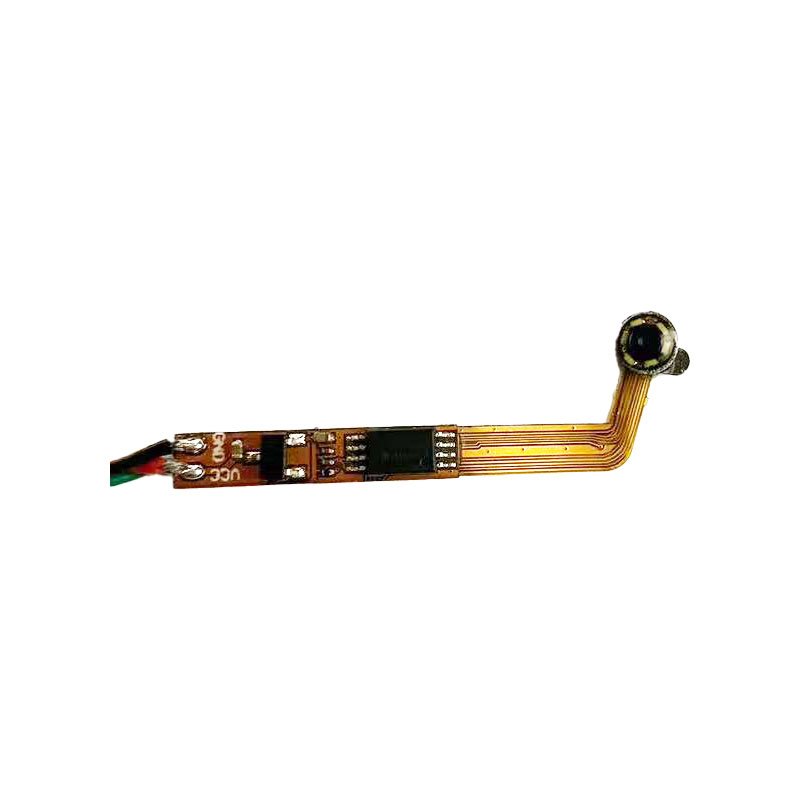
An endoscope camera module is a miniature, self-contained imaging unit: a CMOS image sensor, a micro lens, an interface board and, in most designs, a ring of tiny LEDs, all packed into a slim probe or a compact head. Unlike a general-purpose webcam board, it is engineered around two constraints: very small diameter and short working distance.
That second point matters. An endoscope images objects that are often only millimetres to a few centimetres away: tooth surfaces, an ear canal, the inside of a pipe weld. The lens must hold focus at that distance, with enough field of view to be useful and enough illumination to avoid a dark, noisy picture.
Modules like these are typically supplied as bare components for OEM integration. You build the handle, cable, housing and software around them. That is why specification details such as diameter, interface and LED layout deserve as much attention as megapixels.
2. Why diameter is the first decision
Before sensor, before resolution, before price, decide the outer diameter your product can tolerate. It determines where the scope can go and how comfortable or invasive it is.
At CBRI Tech we cover the common diameter steps that OEM customers ask for:
- 2 mm class: for the tightest access. Our 0MM Endoscope Camera is built around the OmniVision OVM6946 sensor, a class of ultra-compact imager designed for exactly this kind of miniaturised, single-use-style scope design.
- 3 mm class: a very popular balance between slimness and image quality. Our USB module with an OD of 3.3 mm uses the OV9734 sensor at 720p and is listed as a medical endoscope camera module.
- 5 mm class: a good fit when you want a little more room for optics and LEDs. See our 3.5MM Endoscope Camera with a 3.5 mm outside diameter at 720p, and the 720p 3.5mm integrated-type USB endoscope module when you prefer a more integrated build.
- 9 mm class: the practical choice for general inspection tools where a slightly larger probe is acceptable and easier to handle and seal.
Rule of thumb: pick the largest diameter your application allows. Every extra millimetre gives your optical and lighting design more room, and usually improves image quality and manufacturing yield. Go smaller only when the anatomy or the access point forces you to.
3. Sensor and resolution: why 720p is still the workhorse
It is tempting to chase higher megapixel numbers. In endoscopy, the sensor size and the optics matter more than the headline resolution.
A module that is only a few millimetres wide has a tiny sensor. Squeezing more pixels onto a tiny sensor makes each pixel smaller, which reduces light capture and can raise noise, especially in the dim, enclosed spaces where scopes work. A well-tuned 720p (1280 x 720) sensor such as the OV9734 delivers a clean, smooth live image at a frame rate suitable for real-time viewing, which is why so many scopes still ship at this resolution.
Practical consequences for your design:
- Bandwidth and latency stay low. 720p over USB is light on the host system, which helps on low-power Android tablets and embedded boards.
- Software is simpler. Lower data rates mean less compression trouble and a snappier preview.
- Image quality is easier to tune. Exposure, white balance and noise reduction behave more predictably on a sensor that is not pushed to its limits.
If your use case genuinely needs finer detail, for example documenting very small surface defects, discuss a higher-resolution or larger-diameter option with us early. It changes the optical design, not only the sensor.
4. USB, and why it simplifies development
For most OEM teams, a USB endoscope camera is the fastest route from prototype to product. USB video class (UVC) devices are recognised by Windows, Linux, macOS and Android without custom drivers in most configurations, so your software team can start with standard video APIs instead of writing a driver.
What that gives you in practice:
- Plug-and-play bring-up. Your first image can appear on day one of testing.
- One cable for power and data. Fewer parts in the handle and a simpler bill of materials.
- Broad host support. The same module can serve a PC-based cart, a tablet app and an embedded Linux device.
One of our modules also supports USB control of LED brightness, which lets your application dim or brighten the illumination from software. We cover that in the next section, and you can review the 3.9mm 720p endoscope module with USB LED brightness control for Android, Windows, PC and Linux for details.

A note on cable length and EMI. USB has practical length limits, and long, unshielded cables in a handheld probe can pick up noise from motors or other electronics in the handle. If your cable run is long or the environment is electrically noisy, plan for shielding and talk to us about the cable design early.
5. Lighting: the LED question most teams underestimate
Teams spend weeks comparing sensors and then give the illumination a single afternoon. That is backwards. In a dark cavity, light is the image.
Things worth deciding deliberately:
- Brightness control. Too much light on a reflective surface, such as wet tissue or polished metal, causes glare and washed-out areas. Adjustable brightness lets the user match the scene. This is the reason software-controlled LED output is valuable.
- LED placement. LEDs around the lens give even, shadow-free lighting. Uneven placement creates hot spots.
- LEDs at a probe tip warm up. For anything that touches a patient, thermal behaviour must be part of your safety analysis.
- Colour temperature. Neutral white helps users judge tissue or material colour correctly.
If you want the end user to adjust lighting from your app, choose a module that exposes brightness control over USB rather than adding a separate control circuit to the handle.
6. Medical endoscope cameras: what the module can and cannot promise
When buyers search for an endoscope camera medical solution, the most important thing to understand is the difference between a component and a finished medical device.
A camera module is a component. The regulatory status of the final product depends on the complete device: its intended use, materials that contact the patient, electrical safety, sterilisation or single-use design, software and labelling. Your product team, not the module supplier alone, is responsible for demonstrating compliance in the markets you sell into.
What a good module partner should give you is the groundwork that makes that process easier:
- Clear, accurate specifications and a stable sensor and component supply
- Consistent build quality from batch to batch
- Samples for early testing and documentation support for your technical file
- Willingness to customise within reason: cable, connector, lens angle, LED layout
Our medical endoscope camera range is designed as an OEM building block for exactly this kind of project. Always confirm the specific regulatory and biocompatibility requirements for your product with a qualified regulatory advisor.
7. Dental and ENT: the intraoral camera use case
Chairside cameras are among the most common endoscope-style products. A modern intraoral camera dental device helps the clinician show a patient a cracked filling, a worn margin or early decay on a screen, which supports clearer diagnosis and better patient understanding.
What dental and ENT designs usually need from the camera module:
- Small, rounded probe geometry that fits the mouth or ear canal comfortably
- A short focus range that renders teeth, gums and canal walls sharply
- Even, controllable illumination to avoid glare on wet, glossy surfaces
- A cable and housing design that tolerates repeated cleaning and disinfection routines
Our 3.9 mm OEM module with a 720p OV9734 sensor is positioned for ENT, dental and industrial inspection work, making it a flexible starting point if you want one platform that can be adapted across several product variants. Because the same module family serves multiple uses, you can often share firmware and software between a dental model and an industrial model, which reduces development cost.
8. Industrial inspection and borescope cameras
The same technology moves easily outside medicine. A borescope camera lets a technician look inside engines, pipes, wall cavities, machinery and electronic assemblies without taking anything apart.
Our 3-in-1 USB industrial borescope is a 3.9 mm unit with an IP67-rated flexible snake-style tube, built for pipe and cavity inspection and designed to connect to PC, Android and iPhone-class devices. That kind of multi-connector design is why this format sells well to maintenance teams: the inspector can use whatever phone, tablet or laptop is already in the toolbox.
When choosing a borescope module, pay attention to:
- Ingress protection. An IP67 rating means the probe is protected against dust and temporary immersion, which matters in wet or dirty environments.
- Tube flexibility and stiffness. Too floppy and it will not push through a pipe; too stiff and it will not bend around corners.
- Tip protection. A scratched lens ruins the image, so look for a protected, replaceable or well-sealed tip.
- Connector options. Decide whether your users need USB-C, micro-USB and USB-A adapters in the box.
A quick note on terminology: endoscope, borescope and inspection camera overlap heavily in industrial use. In medical contexts, “endoscope” is the standard term. Using the right word in your product listing and documentation helps both customers and search engines understand what you sell.

9. Model comparison at a glance
Use this table as a starting point. Specifications come from our product pages; always confirm the final details for your project with our team before ordering.
| Application | Module | Diameter | Resolution | Interface |
| Ultra-compact scopes | 2.0MM Endoscope Camera (OVM6946) | 2 mm class | See product page | See product page |
| General medical/compact | OV9734 USB 720p, OD 3.3 mm | 3.3 mm | 720p | USB |
| Integrated USB build | 720p 3.5mm integrated USB endoscope | 3.5 mm | 720p | USB |
| Medical, slim probe | 3.5MM Endoscope Camera, 720p | 3.5 mm | 720p | See product page |
| Medical with software-adjustable light | 3.9mm 720p with USB LED control | 3.9 mm | 720p | USB |
| ENT, dental, industrial | OEM 720p OV9734, 3.9 mm | 3.9 mm | 720p | USB |
| Industrial pipe and cavity | 3-in-1 USB industrial borescope, IP67 | 3.9 mm | See product page | USB (PC, Android, iPhone) |
10. A practical selection checklist
Before you request samples, write down answers to these questions. They will save you weeks.
- Where does the probe go, and how narrow is the access? This sets the maximum diameter.
- How far away is the subject? This sets the focus range and lens choice.
- How bright or dark is the scene, and how reflective? This sets LED strategy and brightness control needs.
- What host will it connect to? PC, Android tablet, iPhone or embedded Linux board.
- Is it reusable, sterilised or single-use? This affects materials, sealing and cost targets.
- What volumes do you expect? Prototype quantities and mass production often need different supply and customisation plans.
- Which regulations apply in your target markets? Decide this early, because it shapes every other choice.
- What do you need customised? Cable length, connector type, lens field of view, LED layout, branding and packaging are the usual requests.
Common mistakes we see:
- Choosing resolution first and discovering later that the module is too big for the housing
- Ignoring cable shielding, then chasing intermittent image noise
- Treating the LEDs as an afterthought
- Assuming a component supplier’s specification equals a finished-device certification
11. Frequently asked questions
What is the difference between an endoscope camera and a borescope camera?
The hardware is closely related. “Endoscope” is the standard term in medical and dental settings, while “borescope” is common in industrial inspection of engines, pipes and machinery. Many modules, such as our 3.9 mm USB units, can serve both markets with different housings and cables.
Why do so many endoscope cameras use 720p?
At very small diameters the sensor is tiny, so a well-tuned 720p imager offers a strong balance of image quality, low noise, frame rate and USB bandwidth. Higher resolutions are possible but usually need a larger sensor and optics.
Do USB endoscope camera modules need special drivers?
Most USB modules follow the UVC standard, which Windows, Linux, macOS and Android generally recognise without a custom driver. Confirm host compatibility for your specific device and operating system version during sampling.
Can the LED brightness be controlled from my application?
Some modules can. Our 3.9mm 720p module supports LED brightness control over USB, which is helpful for reducing glare and adapting to different scenes.
Is your module approved for medical use?
A camera module is a component. The regulatory status of a medical product depends on the finished device and its intended use. We can support your documentation and testing process, but you should confirm requirements with a qualified regulatory advisor for your target markets.
Can you customise the module for my product?
Yes. OEM customisation is a core part of what we do, including cable length, connector, lens field of view, LED layout, logo and packaging. Contact us with your drawing or target specification.
What is the smallest module you offer?
Our 2.0MM Endoscope Camera is the most compact option in this group. Contact our team for the latest range of ultra-small modules.
Talk to an engineer before you commit
Selecting an endoscope camera is easier when someone has already solved your problem. Shenzhen Brilliant CMOS Technology Co., Ltd. supplies OEM and ODM camera modules for medical, dental, industrial and IoT products, with sample support and engineering input from the first drawing.
- Browse the full range at cbritech.com
- Send your target diameter, interface and volume, and we will recommend a starting module
Specifications are provided for guidance and may be updated. Please confirm final parameters with our team before placing an order. Camera modules are components; regulatory compliance of a finished medical device remains the responsibility of the device manufacturer.